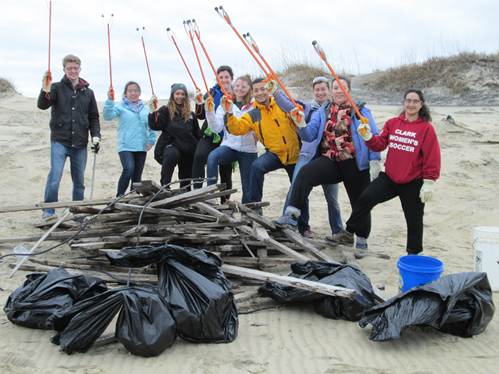
A practical domestic solution to plastic pollution: organise safe, repeated clean-ups of public places, record what is found and use the evidence to prevent repeat litter.
Image credit: Debbie Foote, National Park Service, “Beach Cleaning Volunteers”, Wikimedia Commons, public domain (United States federal-government work). https://commons.wikimedia.org/wiki/File:Beach_Cleaning_Volunteers.jpg
🌱 The solution in a nutshell
Clean-ups remove litter that is already on streets, beaches, parks and waterways before it breaks into smaller pieces or moves downstream. The most useful events also record what was collected and turn that information into prevention action.
A clean-up is not a substitute for reducing plastic at the source or providing good waste services. It is a practical way to protect a site now, engage residents and identify the items and places that need a lasting fix.
⭐ A real-life success story
I Love A Clean San Diego’s 39th Annual Coastal Cleanup Day
- Where: San Diego County, California, United States, across more than 100 parks, canyons, creeks and beaches.
- Who: I Love A Clean San Diego; residents and volunteer site leaders; local governments; nonprofits; businesses; and the California Coastal Commission.
- What they did: Coordinated a one-day public clean-up in inland and coastal sites, then compiled collection totals to show the amount of debris removed from accessible public spaces.
- What happened: The California Coastal Commission’s final 2023 county table recorded 4,722 volunteers and 99,102 pounds of all debris: 62,992 pounds called trash and 36,110 pounds collected as recyclables. An earlier local release reported more than 5,000 people and 76,800 pounds while only 85% of sites had reported. Neither figure is plastic-only, and collected recyclables are not proof of final recycling.
- How long it took: A single morning event on 23 September 2023 within an annual campaign. I Love A Clean San Diego has coordinated Coastal Cleanup Day locally since 1985.
End with the most important lesson:
A well-run clean-up can remove a documented amount of accessible litter and show what needs to change next—but it must be paired with prevention.
Why does this matter?
What is happening? Plastic litter often accumulates where people walk, travel, shop, play or where water carries debris. Once it reaches drains, streams or beaches, it becomes harder and more costly to remove.
Why should we care? Litter can injure wildlife, block drains, spoil public spaces and impose costs on land managers and communities. It also signals service gaps that can make people less willing to care for shared places.
Why is this solution worth knowing about? San Diego demonstrates how one organised event can connect beaches with upstream parks, streets and waterways. Its final published count also shows the importance of labelling preliminary results and explaining exactly what a debris total means.
Plain language note: “collection” means material has been gathered; “recycling” means it has been processed into a usable material. Neither term alone proves that plastic pollution has been prevented.
How to do it
You do not need to solve the whole system at once. Start with one practical improvement, measure it and build from there.
1. Choose a manageable public site and obtain permission
Work with the land manager to select an accessible hotspot, agree the date and collection point, confirm waste pickup and identify habitat restrictions. Avoid unsafe roads, steep banks and nesting areas.
2. Set up trained site leaders and a safety plan
Assign leaders for small areas and provide gloves, bags, grabbers, first-aid access and a briefing. Tell volunteers not to handle needles, chemicals, dead animals, heavy objects or unknown containers.
3. Keep waste streams separate
Use labelled bags or bins for rubbish and locally accepted recyclables, then weigh each stream. Check facility rules first and do not claim a recycling rate unless the receiving facility verifies what it accepted.
4. Record a small, consistent set of data
Log date, site, area searched, number of volunteers, time, weights and common items such as bottles, caps and wrappers. Use the same simple item guide at every repeat event.
5. Use findings to prevent repeat litter
Share a short results note with the land manager and residents. If the same items return, test practical prevention measures such as better bin servicing, refill options, drain controls or targeted outreach.
Start small. A resident group can work with a park manager on one safe hotspot, document the material collected and request one service or design change for the next month.
What difference could it make?
| If we do this… | We could see… |
| Remove, sort and weigh litter at a defined public site. | The site can become cleaner immediately and organisers can document material removed. This does not measure all plastic in a watershed or prove what would otherwise have reached the sea. |
| Record common items using the same field sheet over time. | The pattern can identify recurring local litter and help target bins, outreach or product measures. It does not prove a particular source without further investigation. |
| Route accepted separated material to a verified facility. | This can reduce contamination and improve the chance of recovery. A recycling bag alone is not evidence that all material was recycled. |
Use real measurements where possible. Name what is being counted, how it was measured and what the number does not show.
What are the catches?
No solution is perfect.
- Clean-ups remove visible, reachable debris but do not stop new plastic being produced, used or littered. Prevention and reliable waste services remain necessary.
- A debris weight is not a plastic-only measure. Wet sand, glass, organic debris and other materials can strongly affect it.
- Material collected as “recyclables” is not automatically recycled; contamination and local facility rules determine the final result.
- Volunteer totals and debris data can vary with weather, tide, site choice, search time, training and reporting coverage.
- Clean-ups can expose people to sharps, traffic, hazardous waste, unstable banks and sensitive habitat. Permissions, safety training and a hazardous-find plan are essential.
The honest test is not whether a program sounds good. It is whether it works in the places it serves, treats people fairly, reports what happens to material and improves when the evidence shows a gap.
📚 Want to go deeper?
Three reliable sources for readers who want the full story.
1. California Coastal Cleanup Day 2023 Results — California Coastal Commission
The official final county table for San Diego’s volunteer count and pounds of trash, recyclables and all debris.
Read more → https://www.coastal.ca.gov/publiced/ccd/stats/2023.html
2. Preliminary Results for I Love A Clean San Diego’s 39th Annual International Coastal Cleanup Day
The original local release documenting the date, more than 100 sites, preliminary 76,800-pound result and 85% reporting coverage.
3. The role of citizen science in addressing plastic pollution: Challenges and opportunities
A peer-reviewed assessment of clean-up data, including why simple standardised protocols improve its policy value.
Read more → https://www.sciencedirect.com/science/article/pii/S1462901121003245
The evidence
Where has this been tried? Community clean-ups are used in beaches, parks, streets and waterways worldwide. This story uses a documented county-wide example in San Diego, where inland and coastal sites were cleaned on the same day.
What does the evidence show? The final official table documents a large, measured removal from accessible sites. Citizen-science research suggests that standardised clean-up data can help guide management when methods, coverage and limitations are clear.
How strong is the evidence? Strong for the amount collected at a defined event because the organiser and state commission report it. Moderate for using item data to guide action; weak for claims about total watershed plastic or long-term prevention.
What do we not know yet? The results do not show how much material would otherwise have entered the sea, what proportion was plastic, or what share of collected recyclables became new products.
At a glance
| At a glance | Details |
| Problem | Existing plastic and mixed litter in public places, drains, parks, beaches and waterways. |
| Solution | Safe, repeated community clean-ups combined with standard recording and prevention follow-up. |
| Works at | Neighbourhood, park, beach, waterway and city levels. |
| Typical timescale | One day for a clean-up; repeat seasonally or after storms; prevention work must continue between events. |
| Approximate cost | Low to moderate for a local event, rising with waste hauling, safety equipment, staff coordination and data management. |
| Evidence | Strong for immediate removal at the cleaned site; limited for long-term pollution prevention unless linked to source control. |
| Main benefit | Removes visible litter quickly and produces practical information about hotspots and common items. |
| Main limitation | Treats the symptom unless waste services, product choices and litter sources are improved too. |
🔗 Related solutions
- Improve bins, collection coverage and storm-drain litter controls.
- Reduce unnecessary single-use items and expand refill options.
- Use deposit programs or take-back routes for commonly littered containers.
Library note: This story follows the public-facing format of the GSTIA Open Library of practical solutions to the polycrisis.
Editorial principle: This is an evidence-grounded public guide, not an academic review. It reports what appears to work, where it works, what it costs and where evidence remains uncertain.