Tag: Community

  • Setting Up a Youth Club That Lasts

    Here is a practical step-by-step guide to building a long-lasting youth club, based on Emma Warren’s core principles from Up the Youth Club and the Guardian interview. Her central argument is simple: young people do not primarily need programmes—they need trusted places, trusted adults, and time.

    Step-by-Step Guide to Setting Up a Youth Club That Lasts

    Step 1: Start with the right philosophy

    Before finding a building or funding, decide what your youth club is for.

    A durable youth club is not mainly about preventing crime, fixing behaviour, or producing measurable outcomes.

    It exists to provide:

    • Somewhere safe beyond home and school
    • Positive social belonging
    • Trusted adult relationships
    • Space for fun, creativity and identity formation
    • Long-term community resilience

    Key principle:
    Do not treat young people as problems to solve. Treat them as people worth investing in.

    Ask:

    • What gap exists locally for young people aged 10–18?
    • Where do they currently gather?
    • What is missing—space, belonging, mentors, activities?

    Step 2: Choose a local area with real need

    The strongest youth clubs are hyper-local.

    Look for areas with:

    • Youth boredom / isolation
    • Limited extracurricular access
    • High deprivation
    • Few affordable third spaces
    • Poor transport links
    • Rising antisocial behaviour or disengagement

    The club should be walkable or easy to reach.

    Emma emphasises accessibility:

    Young people need “easily accessible physical places where they can gather.”

    If they need long bus journeys, attendance drops.


    Step 3: Secure a physical home

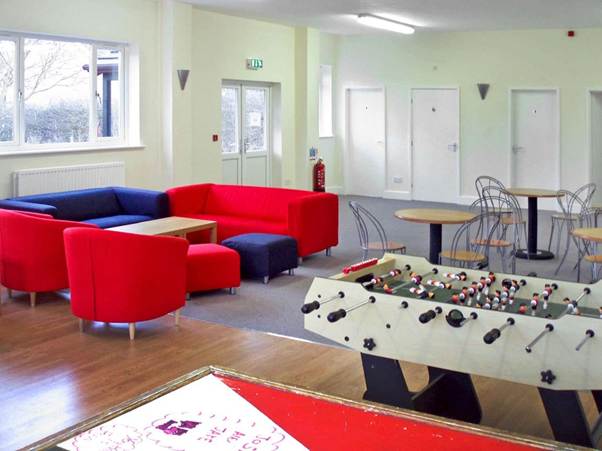
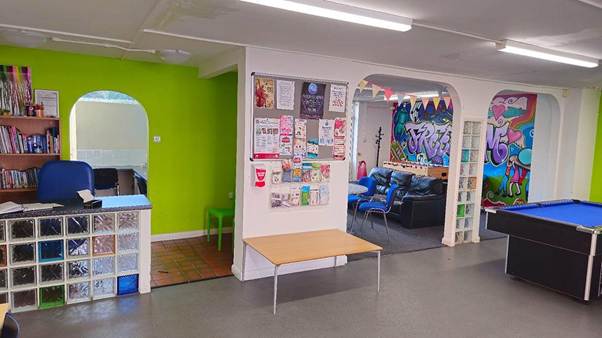
    Youth clubs need a real place.

    This matters more than fancy programming.

    Good options:

    • Church halls
    • Community centres
    • Empty retail units
    • School buildings after hours
    • Scout huts
    • Sports club annexes
    • Unused libraries
    • Converted warehouses

    Minimum needs:

    • Warm
    • Safe
    • Toilets
    • Kitchen or tea station
    • Storage
    • Flexible seating
    • Open space

    Luxury is unnecessary.

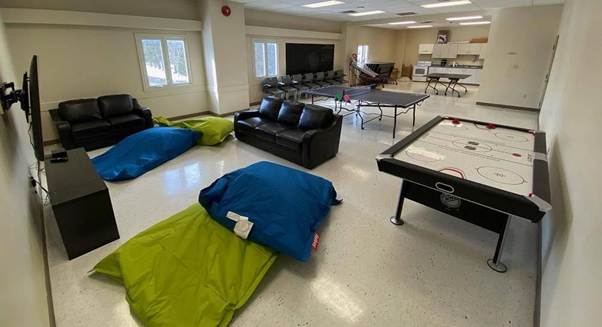
    A cold hall with a kettle and pool table beats no space at all.

    4


    Step 4: Hire the right adults first

    This is the single most important step.

    Emma is blunt:
    Buildings without youth workers stay closed.

    Great youth workers:

    • Read social dynamics
    • Spot isolation
    • Notice conflict early
    • De-escalate tension
    • Welcome difficult young people
    • Hold boundaries without authoritarianism

    Skills needed:

    • Emotional intelligence
    • Trauma awareness
    • Safeguarding
    • Group facilitation
    • Conflict mediation
    • Patience

    Avoid over-programmed staff who only deliver workshops.

    Hire people who can hold space.

    Ideal staffing:

    • 1 experienced youth worker (paid)
    • 2–5 trained volunteers
    • Specialist sessional mentors

    Ratio:
    1 adult per 8–12 regular attendees.


    Step 5: Build trust through “automatic positive regard”

    Emma repeatedly stresses acceptance.

    Every young person entering should feel:

    • Not judged
    • Not labelled
    • Not interrogated
    • Not reduced to risk factors

    Instead of:

    • Why are you here?
    • Are you in trouble?
    • Fill in this form

    Use:

    • Hi, welcome
    • What’s your name?
    • Tea?
    • Fancy a game?
    • What are you into?

    This creates belonging.

    The first 30 seconds matter.


    Step 6: Make “hanging out” legitimate

    Many adults make a fatal mistake:

    They think every minute needs purpose.

    Wrong.

    Youth clubs need structured unstructured time.

    Allow:

    • Chatting
    • Music
    • Pool
    • Ping pong
    • Gaming
    • Quiet sitting
    • Doing nothing

    Why?

    Because informal interaction is where:

    • trust develops
    • mentoring happens
    • problems surface naturally

    Conversation often starts during boredom.


    Step 7: Offer low-barrier activities

    Activities should invite participation, not intimidate.

    Good starter activities:

    • Pool
    • Table tennis
    • Board games
    • Music production
    • Podcasting
    • Cooking
    • Gardening
    • Street dance
    • Football
    • Art
    • Film nights
    • Repair workshops

    Avoid expensive specialist equipment initially.

    Start simple.

    Emma’s point about table tennis is revealing:
    Small activities can create lifelong culture.

    Table tennis is ideal because:

    • cheap
    • social
    • cross-age
    • inclusive

    Step 8: Feed people

    Never underestimate food.

    Food does several things:

    • reduces tension
    • attracts attendance
    • helps vulnerable teens
    • creates ritual
    • encourages conversation

    Provide:

    • toast
    • fruit
    • sandwiches
    • soup
    • hot drinks

    Some young people arrive hungry.

    A sandwich can be more impactful than a workshop.


    Step 9: Co-create with young people

    Don’t design everything from above.

    Ask:

    • What do you want here?
    • What should we change?
    • What events would you run?

    Let them shape:

    • rules
    • décor
    • playlists
    • activities
    • club identity

    Ownership increases retention.


    Step 10: Create culture, not just services

    Long-lasting clubs become identity-forming.

    They develop:

    • rituals
    • stories
    • inside jokes
    • traditions
    • alumni pride

    Examples:

    • annual talent night
    • mural wall
    • club magazine
    • music showcase
    • football tournament
    • volunteering ladder

    The club should become:

    “the place I grew up.”

    That creates generational longevity.


    Step 11: Build safeguarding and boundaries

    Warmth without boundaries fails.

    Set clear expectations:

    • Respect people
    • No violence
    • No harassment
    • No drugs onsite
    • No bullying

    Have written:

    • safeguarding policy
    • incident procedures
    • escalation pathways
    • volunteer code

    Serious safeguarding needs links to:

    • schools
    • social workers
    • NHS services
    • police liaison (carefully)

    Given your NHS context, mental health referral pathways matter.

    National Health Service


    Step 12: Diversify funding

    Youth clubs die when reliant on one grant.

    Aim for mixed income:

    Public

    • council grants
    • lottery funds
    • government youth funds

    Philanthropy

    • local donors
    • foundations
    • trusts

    Community

    • memberships (£1–£3 optional)
    • fundraising events
    • donations

    Enterprise

    • café
    • room hire
    • workshops
    • corporate sponsorship

    Rule:
    No single source >40% of revenue.


    Step 13: Measure what matters

    Emma warns against shallow metrics.

    Avoid only measuring:

    • attendance
    • sessions delivered
    • demographics

    Track long-term outcomes too:

    Quantitative:

    • retention
    • school attendance
    • exclusions
    • volunteering

    Qualitative:

    • confidence
    • belonging
    • resilience
    • testimonials
    • alumni stories

    Best question:
    Who came back years later, and what changed?


    Step 14: Build alumni and succession

    Many clubs fail when founders leave.

    Create succession early.

    Develop:

    • youth leaders
    • volunteer pipeline
    • governance board
    • trustee rotation
    • alumni mentors

    Best model:
    Teen attendee → volunteer → youth worker.

    That creates cultural continuity.


    Step 15: Commit for decades, not projects

    This is the hardest lesson.

    Youth clubs fail when treated as:

    • 12-month interventions
    • short grants
    • temporary experiments

    Emma’s ideal youth service is built around one idea:

    Trusted adults in stable places for a very long time.

    Think in:

    • 10 years
    • 20 years
    • generations

    Not quarters.


    Minimal Launch Model (if starting small)

    You can start with:

    • One hall
    • Two trained adults
    • One evening/week
    • Pool table or ping pong
    • Tea + sandwiches
    • £8–15k annual budget

    That is enough to begin.


    The Golden Rule

    If you remember only one thing:

    Young people rarely need more lectures.
    They need places where they feel welcomed, seen, challenged, and valued.

    That is what makes a youth club last.

  • Community-Based Creative Resilience Programme

    ENTRY ID: GSTIA-CREATIVITY-004
    Date added: 28/06/2026
    Entry status: [ ] Draft [ ] Under review [x] Published
    Submitted by: GSTIA Knowledge Curation Team


    1. Solution Title

    Community-Based Creative Resilience Programme


    2. Step-by-Step Implementation Guide

    A sequenced, actionable guide for a national government, ministry, or statutory body seeking to implement this solution. Steps should be in logical dependency order – later steps assume earlier ones are complete or underway.

    Step 1 – Convene a Community Creative Assembly
    Gather a diverse cross-section of the community—residents, local artists, educators, youth workers, faith leaders, business owners, and representatives from local services (e.g., police, health, housing). The purpose is to establish a shared vision for how creativity can address local challenges. Robinson emphasises that communities are “created by people and they need to be constantly re-created if they are to survive” . This assembly creates the foundational relationships and collective ownership necessary for the programme’s success.

    Step 2 – Map Community Assets and Aspirations
    Conduct a participatory asset-mapping exercise, identifying existing creative resources (e.g., community centres, parks, libraries, empty shops, local artists, musicians, storytellers, elders with traditional skills). Crucially, also document residents’ aspirations and local challenges (e.g., youth disaffection, isolation of elderly, lack of safe spaces, unemployment). This aligns with Robinson’s principle that “we all have great natural capacities, but we all have them differently” and that any community programme must begin by understanding its own unique ecology.

    Step 3 – Identify and Train Local “Creative Champions”
    Recruit and train a team of local residents to serve as Creative Champions. These individuals should be trusted community members with a passion for creative engagement (not necessarily professional artists). Provide them with basic training in facilitation, group dynamics, and project management. Robinson argues that “helping people to connect with their personal creative capacities is the surest way to release the best they have to offer” . This peer-to-peer model builds local capacity and sustainability.

    Step 4 – Establish a Neighbourhood Creative Space
    Secure a physical space within the community—a community centre, a local church hall, a vacant shop, or a converted shipping container. This should be a welcoming, accessible, and safe space equipped with basic creative materials (paper, paint, musical instruments, craft supplies, recycled materials). The space should be open and free to all. As Robinson notes, “creating the conditions where [creativity] will flourish” requires a supportive environment.

    Step 5 – Pilot “Creative Evenings” and Intergenerational Sessions
    Launch a regular programme of creative activities, including both open-access “Creative Evenings” (for adults) and dedicated intergenerational sessions where older and younger participants can share and learn together. Activities should be varied—storytelling, music-making, visual arts, gardening, cooking. Robinson highlights that “creativity is a multi-faceted process” that can be expressed through “many ordinary abilities and some specialised skills” . Variety ensures broad appeal.

    Step 6 – Develop a Community-Led Arts-Based Intervention for Disaffected Youth
    Adapt the Bradford Dance Academy model to the local context by creating a structured, arts-based programme for young people disengaged from school or at risk of offending. This should be a co-designed, high-expectation programme that treats participants as “professional artists in training” rather than “cases.” The programme should culminate in a public performance or exhibition. Robinson’s account demonstrates this approach can lead to “remarkable” transformations in just “three weeks” .

    Step 7 – Launch a Community Storytelling Archive
    Establish a programme that collects and shares local stories, histories, and cultural traditions through oral history projects, community archives, murals, or a local podcast series. This builds on Robinson’s observation that “the human world is created out of our minds as much as from the natural environment” and that communities are built through shared narratives and meaning-making.

    Step 8 – Create “Creative Living” Networks
    Establish peer networks and local exchange systems that sustain creative practices—a skills exchange (e.g., “I’ll teach you guitar if you teach me painting”), a community garden, a tool-lending library, or a regular community market for local crafts. This embeds creativity into everyday life.

    Step 9 – Celebrate Local Creative Achievements
    Hold a regular community celebration (e.g., a quarterly Creative Showcase) to share the work produced. This is a powerful motivator, as demonstrated by the Bradford Academy, where the “public performance at the end of the first three weeks is a massive step” providing “the first time that they’ll be seen in a positive light” .

    Step 10 – Embed and Sustain Through Local Governance
    Work with the local government (parish council, neighbourhood association, etc.) to embed the programme’s principles into long-term community planning—forming a permanent community creativity committee, securing ongoing funding, and creating a formal “Creative Residents” role. Robinson warns that “governments and businesses throughout the world recognise that education and training are the keys to the future,” but this recognition must translate into sustained local action .


    3. Polycrisis Strand(s)

    Select all that apply. For compound solutions, rank primary strand first. These 16 strands are the stable website navigation tags – use them as written. They are distinct from the Dewey Decimal classification in Section 5, which remains the permanent, externally citable reference.

    • Population growth
    • Urbanisation and migration
    • Industrial output
    • Energy and mineral resources
    • Transport and mobility
    • Globalisation and finance
    • Land and soil systems
    • Water systems
    • Climate change
    • Biodiversity loss
    • Pollution, toxics and waste
    • Digital infrastructure and AI
    • Food, health and disease
    • Inequality
    • Education
    • Governance, peace and conflict

    Primary strand: Education
    Interaction effects with other strands: This programme directly addresses social isolation and community fragmentation, rebuilding trust and mutual support essential for resilience against Inequality and Governance failure. It mitigates Urbanisation and migration effects by providing low-cost opportunities for skill development, self-expression, and meaningful participation in increasingly diverse communities. It can incorporate ecological themes (community gardens, crafts from recycled materials), linking to Climate change and Land and soil systems. The intergenerational element addresses Population growth dynamics by connecting generations.


    4. Scale Category

    ScalePrimary?Enabling role?
    IndividualYes
    Family / HouseholdYes
    Community / VillageYes
    City / RegionYes
    Nation State
    Global

    Notes on scale interaction: This is a community-level initiative most effective when supported by enabling city and regional policies (access to spaces, funding, permissive frameworks). It depends on individual participation and household-level support. In Robinson’s terms, it is change that must “come from the ground up” .


    5. Dewey Decimal Classification

    Primary DDC: 307.3 — Social structure and community
    Secondary DDC(s): 153.35 — Creativity and creative thinking; 302.1 — Social interaction and community development; 361.8 — Community action and social work
    Subject headings (LC or local): Community development; Creative ability — Social aspects; Arts and society; Community arts projects; Social integration.


    6. Regional Applicability

    Evidenced implementations: The Bradford Dance Academy (UK) is a key example . Similar community arts programmes exist globally, including “community arts organizations” cited by Robinson across the U.S., UK, and Europe. Examples include the UK’s “Creative Partnerships” programme, the “Community Arts Network” in Australia, and numerous U.S. “arts and culture” community development programmes.
    Climatic/geographic scope: [ ] Tropical [ ] Temperate [ ] Arid [ ] Arctic/sub-arctic [ ] Coastal [x] All
    Political economy prerequisites: Requires a relatively stable local governance structure (or functioning community association). A local champion and a degree of social trust among community members are essential.
    Contraindications: Very high-conflict communities or those with extremely low social capital may find it difficult to initiate. In such cases, a phased approach, starting with a single trusted institution (e.g., a church or school), may be necessary.


    7. Cost Estimate

    Cost tierIndicative rangeBasis
    Pilot / proof of concept£5k – £25kEstablishing one Creative Space and running a pilot “Creative Evenings” programme for 6 months. Includes basic materials, small stipend for community organiser, promotional costs.
    Community-scale deployment£25k – £100kExpanding to full programme with Youth Diversion element, storytelling, networks, and 2-3 regular weekly activities.
    City/regional scale£100k – £500kReplicating the model across 5-10 neighbourhoods within a city.
    National rollout£5m – £50mScaling nationally across thousands of communities, with central coordination and training function.

    Cost notes: Costs primarily for modest staff support (part-time coordinator) and consumable materials. Model deliberately re-uses existing community infrastructure, avoiding costly new build. Relies heavily on volunteer time (Creative Champions).
    Funding mechanisms used in existing implementations: Local government community development grants; Lottery or philanthropic funding; Small corporate sponsorship (local businesses); Crowdfunding; In-kind donations (space, materials).


    8. Timescale Estimate

    Time to initial implementation: 1-3 months (to convene the assembly, map assets, and open a space).
    Time to measurable impact: 6-12 months (reduced social isolation, new community projects, increased youth engagement).
    Time horizon of full benefit: 3-5 years (a fundamental shift in community culture, resilience, and cohesion).
    Short-term vs long-term tension note: Mandatory — The model relies on voluntary effort and small amounts of funding. There is a risk of volunteer burnout and programme “attrition” if not carefully managed and sustained. Building community trust and participation takes time. However, the long-term benefit of a resilient, connected community capable of collaborative problem-solving is immeasurable and essential for navigating the polycrisis.


    9. Evidence Base

    Primary source(s): Robinson, K. (2011). Out of Our Minds: Learning to be Creative (2nd ed.). Capstone. ; The Bradford Dance Academy case study in Chapter 5 ; Robinson’s descriptions of “community arts organisations” in the U.S., UK, and Europe ; Various evaluations of community arts programmes (e.g., the UK’s “Creative Partnerships” programme; U.S. “Arts for All” initiatives).
    Evidence quality: [ ] Peer-reviewed [x] Grey literature [x] Practitioner case study [ ] Modelled projection
    Known counter-evidence or limitations: The evidence base for community arts programmes is often qualitative and consists of “case studies,” which can be difficult to generalise. Quantitative evidence of impact on crime or employment is limited and contested. The approach is highly context-dependent; what works in one community may not work in another. It relies on a “magic” factor of local leadership and community “buy-in” that is difficult to engineer from outside. Programmes can be fragile and vulnerable to changes in funding or local priorities.
    Supporting media (external links only): [Optional. Link to photographs, video, diagrams, or data visualisations hosted on the source organisation’s own site, a reputable media outlet, or an official project page. Do not upload or embed images directly – the library links to evidence, it does not host it. For each link, note in one phrase what it shows and who hosts it.]


    10. Implementation Indicators

    Output indicators: Number of Creative Champions trained; Number of community members engaged per week; Number of creative events held; Number of young people in youth diversion programme; Number of stories collected in community archive; Hours of volunteer time contributed.
    Outcome indicators: Self-reported social connectedness and well-being; Reduction in reported anti-social behaviour; Increase in school attendance/engagement (for participants); Number of new community-led initiatives; Degree of community cohesion (measurable through surveys).
    Reporting mechanism: A self-reporting model compiled by the Community Creative Assembly, including attendance records, participant testimonials, and a simple annual community survey. These can be reported to local partners and funders.


    11. Related Entries

    • GSTIA-CREATIVITY-001 : National Framework for Creativity-Centric Education
    • GSTIA-CREATIVITY-002 : Personal Creativity Reclamation Protocol
    • GSTIA-CREATIVITY-003 : City-Wide Creative Learning Ecosystem
    • GSTIA-COMMUNITY-003 : Community Arts and Youth Diversion (focused on the Bradford Dance Academy model)

    GSTIA Open Library entries are curated, not peer-reviewed in the academic sense. The institute’s commitment is to honest, evidence-grounded representation of what works, where, at what cost, and over what timescale – including where the evidence is weak or contested.