Category: Misc

  • FREE Sustainability courses

    FREE Sustainability courses from the United Nations.

    🔗 Course Links:

    1. The Paris Agreement on Climate Change as a Development Agenda: https://lnkd.in/eFsr2TwM

    2. Integration of the SDGs into National Planning: https://lnkd.in/e6vuGHng

    3. Green Marketing Challenge: https://lnkd.in/eWByut-N

    4. Impact Measurement & Management for the SDGs: https://lnkd.in/e3mBsuhQ

    5. Integrated Approaches to Mainstreaming, Acceleration and Policy Support for the SDGs: https://lnkd.in/eENsUTdw

    6. Digital4Sustainability Learning Path: https://lnkd.in/e3Vu_842

    7. What is the Net-Zero Standard: https://lnkd.in/eKVzhvm8

    8. Setting Science-Based Targets to Achieve Net-Zero: https://lnkd.in/e2rETaz9

    9. Sustainable Consumption and Production in Africa: https://lnkd.in/eAh7J75a

    10. Introduction to risk-informed, conflict-sensitive and peacebuilding programming: https://lnkd.in/evgywv46

    🌿 Share this valuable opportunity with your network, and together, let’s drive sustainable change worldwide!
    🌿 Thank you Paulyn Duman for compiling these resources. Let’s Join the movement for #sustainability!
    🌿 Follow Me- Zainab Bie for more such resources and conversations on Climate change, Economics, and Multilateral Diplomacy

  • Micro Greens

    Many people give a list of excuses why they can’t grow their own vegetables –
    they haven’t got green fingers
    they haven’t got enough space
    they don’t know what to do
    it’s too expensive
    they haven’t got the right kit

    But it’s easier than you think! If I can do it then you can do it.

    Get a plastic takeaway pot, some lettuce seeds and a bit of peat free compost.

    Just add water.

    In a few days it looks like this

    In a few days it looks like this

    In a week or two it looks like this

    And in a month you can cut as many leaves as you like with scissors to add to your salad or sandwich

    Yummy! And zero food miles.

    Bargain seeds from Premier Seeds Direct.

  • In 2030, You’ll Own Nothing And Be Happy About It

    In 2030, You’ll Own Nothing And Be Happy About It

    In 2030, You’ll Own Nothing And Be Happy About It

    We have to cut personal consumption of stuff because burning fossil fuel has caused the current climate change emergency. 

    The World Economic Forum leaders expect us to reduce personal ownership to zero. 

    Have these private jet flying billionaires got our best interests at heart?

    How comfortable are you with the idea of owning nothing and being happy?

    The folks at The World Economic Forum, led by Klaus Schwab, never tire of “reimagining” everything. From food chains, digital identity, healthcare, even reimagining capitalism itself, everything seems to be on the table. Our betters at Davos have taken it upon themselves to make every aspect of our lives fair game for being reimagined, reconstituted, recalibrated, reordered and reset. Always along top-down technocratic lines they dream up at their exclusive, invite-only confabs….”

    Tell me what you think.

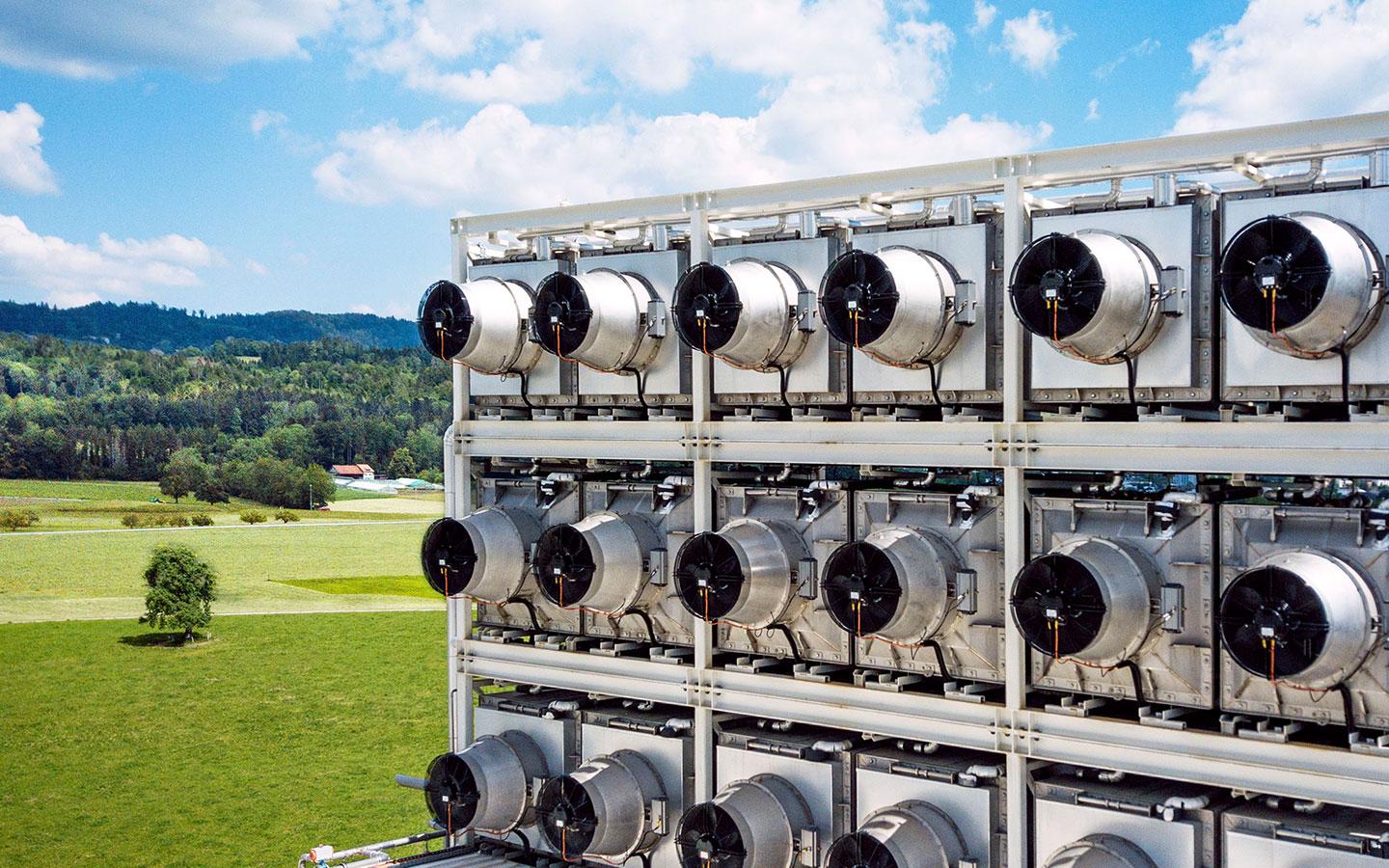
  • Why is direct air capture of CO2 a dangerous distraction?

    Why is direct air capture of CO2 a dangerous distraction?

    Background
    Current plans to reduce CO2 back to safe levels demand that we capture billions of tons of CO2 per year  as soon as possible. Many of these plans need technology that doesn’t exist yet and we hope will be invented. Hope is not a strategy. 

    Cost 
    The range of costs for DAC vary between $250 and $600 per tonne today. Optimists say this might drop to $150 per tonne in five to ten years. Costs are high because of expensive energy, infrastructure and maintenance. Genuine tree planting projects quote about $15 per tonne.

    Scalability 
    There are about 20 DAC units worldwide capturing less than 10000 tonnes CO2 per year. IPCC forecasts need 1 billion tonne CO2 capture per year to meet targets so we are 5 orders of magnitude out. 

    Use of the CO2 
    The largest market for CO2 today is enhanced oil recovery (EOR), which is controversiallly used to increase fossil fuel production. This sounds counter productive.

    Track record 
    All direct air capture systems so far have failed economically or technically. 

    Opportunity Cost 
    The attraction of big shiny infrastructure takes away investment from less glamorous projects. Thousands of tons of steel, copper and concrete resources are diverted away from tried and tested wind and solar technology.

    Call me to find how to take genuine sustainability action.

    Photo credit  -Climeworks’ first commercial direct air capture plant, based in Hinwil, Switzerland. The fans draw in air, where the CO2 in that air reacts with chemicals that selectively bind it. Photo by Climeworks

  • What can we learn from indigenous peoples?

    How do native populations survive 10 times longer than most civilisations?

    The age of oil will span about 100 years.

    Australian, North and South American peoples  have lived in harmony with nature for more than 10000 years. How did they do it?

    Indigenous forest gardens in the tropics and subtropics have been increasingly appreciated as presenting a valuable model for more sustainable agriculture. The practices have been somewhat easier for researchers to identify because some are still in use today, and they also more closely resemble Eurocentric notions of agriculture—such as annual cycles of planting and harvesting.

    “In the 1930s, an archeologist from the Smithsonian wrote a short paper remarking on the exquisite vegetation around First Nation villages in Alaska. The villages’ surroundings were filled with nuts, stone fruit, berries, and herbs—several non-native to the area and many that would never grow together naturally. The significance of these forest gardens went largely overlooked and unrecognized by modern archeology for the next 50-plus years…..”

    Link to the original article

    Take action, book a quick call

  • What do you know about the new world order?

    In 2030, You’ll Own Nothing And Be Happy About It

    We have to cut personal consumption of stuff because burning fossil fuel has caused the current climate change emergency. 

    The World Economic Forum leaders expect us to reduce personal ownership to zero. 

    Have these private jet flying billionaires got our best interests at heart?

    How comfortable are you with the idea of owning nothing and being happy?

    Read

    Reimagining The World Economic Forum

    And tell me what you think.

  • What are carbon offset schemes?

    A carbon offset scheme is a way to compensate for emissions caused by travel or lifestyle choices. Carbon offsets take place when one company or individual pays to have another company reduce or capture emissions elsewhere in the world.

    How does carbon offset work?

    When you purchase a carbon offset, you are essentially paying to have another company reduce emissions elsewhere in the world. For every ton of CO2 you emit, your chosen offset provider will invest in a project that will prevent or remove an equivalent amount of CO2 from the atmosphere.

    There are many different types of carbon offset projects, from renewable energy projects, forestry and land management initiatives to direct air acpture technologies. Some schemes require you to purchase credits, while others allow you to donate money or resources to projects that reduce carbon dioxide emissions.

    How much do carbon offset schemes cost?

    The cost of carbon offset schemes varies, but they are usually affordable. The cost of a carbon offset scheme is usually stated in terms of pounds per tonne of carbon dioxide captured and permanently stored. The price may vary between ÂŁ10 per ton for a forestry project in Africa to ÂŁ300 per ton for a direct air capture scheme in Europe.

    Why are carbon offset schemes often criticised?

    Many people object to carbon offset schemes because they believe they are a way for companies to avoid responsibility for their emissions. The idea is that by buying carbon offsets, companies can say they have taken action to reduce their emissions and avoid penalties from the government. Critics argue that this is a way for companies to avoid taking real action, and that the money spent on carbon offsets is simply being used to buy off the public.

    Conclusion

    Carbon offset schemes are a way of reducing your carbon footprint. They are not perfect, but they can be  effective if used correctly. They should not be used as a licence to increase emissions. Consult an expert before buying into a scheme.