Category: Education

  • A UK National Framework for Open Access to Publicly Funded Research.

    ENTRY ID: SCALE-NATION-0003
    Date added: 11/07/2026
    Entry status: [ ] Draft [ ] Under review [x] Published
    Submitted by: GSTIA Open Library


    1. Solution Title

    A UK National Framework for Open Access to Publicly Funded Research.


    2. Step-by-Step Implementation Guide

    This guide is based on the UK’s position as a global leader in open access policy, building on the evidence of corporate concentration in academic publishing and the need for systemic reform . The core argument is that publicly funded research constitutes a public good, and the UK’s framework demonstrates how national-level mandates can drive global change by leveraging the power of research funders .

    Step 1 – Strengthen and Expand UKRI’s Single Open Access Policy
    UK Research and Innovation (UKRI), the UK’s largest public research funder, has established a single open access policy across all nine of its councils . This policy already requires immediate open access for research articles submitted after 1 April 2022 and for monographs, book chapters, and edited collections published after 1 January 2024 . The next phase (2026-2030) must further strengthen implementation, including no longer allowing UKRI funds to be used for hybrid open access after 2028-2029 . This policy is the cornerstone of the UK’s national framework.

    Step 2 – Embed Open Access into the Research Excellence Framework (REF)
    The REF is the UK’s system for assessing the quality of research in higher education institutions, informing the allocation of approximately £2 billion per year of public funding for universities’ research . The four UK funding bodies must finalise and enforce the REF2029 open access policy, which is expected to require articles and conference proceedings to be fully open access, with compliance involving deposit in a repository within three months of publication . This creates a powerful incentive for universities to ensure their researchers comply.

    Step 3 – Use Jisc’s Collective Negotiation Power to Reshape the Market
    Jisc, the not-for-profit membership organisation serving the UK’s tertiary education sector, negotiates agreements with the five largest academic publishers (Elsevier, Springer Nature, Taylor & Francis, Wiley, and Sage) on behalf of UK universities . UK universities currently spend approximately £112 million annually on these agreements . The “Next Generation Open Access” programme, launched in March 2025, aims to achieve cost savings, financial sustainability, and more equitable participation by negotiating agreements that:

    • Reduce and constrain all costs .
    • Offer a choice of open access publishing options .
    • Advance a rapid and equitable global transition to full open access .
    • Promote inclusive participation and provide transparency on pricing .

    Step 4 – End the Payment of Public Funds for Hybrid Open Access
    UKRI has committed that from 2028 to 2029, it will no longer allow its funds to be used for hybrid open access (a publishing model where a subscription-based journal allows authors to publish specific articles as open access, charging an Article Processing Charge) even when in a transitional agreement . This decisive action will end the practice of “double-dipping” (publishers charging both subscription fees and APCs) and force a transition to more sustainable, fully open access models .

    Step 5 – Maintain a Multi-Route Approach to Open Access
    The UK’s policy allows researchers to comply via two routes, which provides flexibility and inclusivity :

    • Route 1: Publish in a fully open access journal or platform.
    • Route 2: Publish in a subscription journal and deposit the Author Accepted Manuscript in a compliant repository (e.g., an institutional repository) at the time of publication.
      UKRI is committed to strengthening Route 2 by assessing repository infrastructure and developing guidance . For books, the policy allows for a 12-month embargo, and there is a dedicated £3.5 million fund to support open access book publishing .

    Step 6 – Invest in Capacity-Building, Infrastructure, and Monitoring
    The UK has made significant investments to support the transition, including a £129 million Digital Research Infrastructure Programme, a £46.7 million annual investment in open access, and partnerships with the OAPEN Foundation for open access book infrastructure . UKRI is also strengthening monitoring and evaluation, with plans to reintroduce block grant reporting in 2026-2027 to address evidence gaps around costs and compliance . The establishment of a National Data Library, as highlighted in the UK Science and Technology Framework (2025), is also a key component of this infrastructure .

    Step 7 – Engage in International Leadership and Collaboration
    The UK was a founding member of the European Open Science Cloud (EOSC) and leads the EOSC Pilot project (2017-2019) . The UK also participates in international initiatives such as the G7 Open Science Working Group and the International Science Council’s Committee on Data . UKRI is a signatory to cOAlition S and supports Plan S principles . The UK’s commitment to open access aligns with that of other major funders, including the Wellcome Trust, Cancer Research UK, and the Foreign, Commonwealth and Development Office (FCDO), ensuring a coherent national approach .


    3. Polycrisis Strand(s)

    Primary strand: Digital infrastructure and AI

    Interaction effects with other strands:
    This solution directly addresses how the current academic publishing system acts as a barrier to solving other polycrisis strands. The high cost of access stifles the rapid dissemination of research needed for climate changebiodiversity loss, and global health challenges . It exacerbates inequality, as researchers in the Global South cannot access vital information . It hinders progress in education. It is itself a product of globalisation and finance, with a few corporations extracting enormous profits from a global system . Open access is fundamental to achieving the Sustainable Development Goals.


    4. Scale Category

    ScalePrimary?Enabling role?
    Individualx
    Family / Household
    Community / Village
    City / Region
    Nation Statex
    Global

    Notes on scale interaction: The national framework provides the policy, funding, and infrastructure for institutional and individual-level implementation. The UK’s leadership also contributes to the global scale by setting a standard that other nations and funders can follow.


    5. Dewey Decimal Classification

    Primary DDC: 070.5 – Publishing
    Secondary DDC(s): 338.4 – Economics of publishing; 347 – Intellectual property and copyright law; 001.4 – Research methods and communication
    Subject headings (LC or local): Open access publishing; Scholarly communication; Academic publishing–Economic aspects; Research–Finance–Great Britain.


    6. Regional Applicability

    Evidenced implementations: The UK framework is the primary case study, with UKRI’s open access policy, Jisc’s collective negotiations, and the Research Excellence Framework being key components . Other comparable national implementations include the US White House OSTP memo for immediate OA by 2026, Science Foundation Ireland’s policy, and Finland’s government-funded national Diamond OA publishing platform .

    Climatic/geographic scope: [ ] Tropical [ ] Temperate [ ] Arid [ ] Arctic/sub-arctic [ ] Coastal [x] All

    Political economy prerequisites:

    • A functioning national research funding system with significant public investment.
    • Political will among major funders and the government to enforce mandates.
    • An organised academic community willing to advocate for and adopt new practices.

    Contraindications:

    • Nations where there is no government or institutional support for public research.
    • A strong preference for the status quo among influential academic institutions and researchers, who may be invested in the prestige economy of “top” journals.
    • Ineffective or dysfunctional systems for research governance.

    7. Cost Estimate

    Cost tierIndicative rangeBasis
    Pilot / proof of concept£10M – £50MFunding for a network of non-profit, community-led journals in a specific discipline or a regional equity fund.
    Community-scale deployment£100M – £500MExpanding support for non-profit publishing, creating a global equity fund for developing nations, and developing shared technical infrastructure.
    City/regional scale£500M – £1BSupporting the transition of all publicly funded research outputs in a major region (e.g., a devolved administration) to full Open Access.
    National rollout£2B – £5B+The estimated annual cost of the global system that locks publicly funded research behind paywalls, estimated at $10-15 billion for subscriptions . Redirecting this money could fund the transition to a global open access system.

    Cost notes: The primary cost driver is the transition away from the current system. While APCs for Open Access publishing can be costly, and the total global cost of the transition is significant, this expenditure replaces the even larger and inequitable $19 billion global subscription market . The costs should be seen as a reinvestment in a more efficient and equitable system for a global public good.

    Funding mechanisms used in existing implementations: Direct government budget allocation to funding agencies (e.g., UKRI ring-fences £3.5m for OA monographs ), global health funds, and institutional budgets.


    8. Timescale Estimate

    Time to initial implementation: 1-2 years for funders to adopt mandates (some deadlines are imminent, e.g., the US OSTP memo deadline of 2026 ).
    Time to measurable impact: 3-5 years to see a significant increase in immediate open access for newly published research.
    Time horizon of full benefit: 10-20+ years, as a fundamental shift in research culture and the publishing landscape will take time. Breaking up the monopoly will be a long-term process.
    Short-term vs long-term tension note: There is significant short-term institutional and career pressure to publish in prestigious (and expensive) journals. The corporatisation of research assessment incentivises this behaviour . However, with funder mandates removing the choice of where to publish, and with reforms to research assessment, this pressure can be alleviated in the long term, creating a fairer and more accessible system.


    9. Evidence Base

    Primary source(s):

    1. Larivière, V., Haustein, S., & Mongeon, P. (2015). The Oligopoly of Academic Publishers in the Digital Era. PLoS ONE 10(6): e0127502 .
    2. Houghton, F. (2024). Gandy & ‘Books under threat’: A response. Area, 1-6 .
    3. UK Research and Innovation. (2021). UKRI Open Access Policy .
    4. Jisc. (2025). Next Generation Open Access Programme .
    5. Research England. (2024). How to publish the findings of Research England-funded research .

    Evidence quality: [x] Peer-reviewed [x] Grey literature [x] Practitioner case study [ ] Modelled projection

    Known counter-evidence or limitations:
    The primary limitation is the political and ideological challenge. The corporate publishers are extremely powerful, profitable, and well-lobbied . There is also strong path dependency and inertia within academia, with a deeply embedded prestige economy that rewards publishing in “top” journals, many of which are controlled by the corporate oligopoly. The transition also raises complex questions about who pays for Open Access and how to ensure that the system is equitable, particularly for authors without funding. However, the evidence base for the problem and the effectiveness of mandates is very strong, and the solution is gathering unprecedented political momentum.

    Supporting media (external links only):

    Link verification date: 11/07/2026


    10. Implementation Indicators

    Output indicators:

    • Percentage of UKRI-funded research articles published as immediate open access (baseline: 63% in 2022) .
    • Percentage of UKRI-funded monographs, book chapters, and edited collections published as open access within 12 months.
    • Number of UK universities complying with the REF open access policy.
    • Global market share and profit margins of the “Big Five” publishers in the UK context.

    Outcome indicators:

    • Global subscription costs and profit margins of the “Big Five” publishers.
    • Citations and reuse metrics for open access articles vs. paywalled articles.
    • Access rates for researchers and institutions in low- and middle-income countries.
    • Progress towards full, equitable, and sustainable open access for all UK publicly funded research.

    Reporting mechanisms: UKRI, Jisc, and the UK’s four funding bodies for research assessment will monitor these indicators and report progress.


    11. Related Entries

    • [Solution Title: A Global Framework for Open Access to Publicly Funded Research] (This is the national complement to the global framework).
    • [Solution Title: A National Strategic Framework for Invasive Species Control] (This solution is a prerequisite for the rapid sharing of research needed to combat all environmental problems).
    • [Solution Title: Reforming Research Assessment Culture] (A complementary and essential policy shift to break the prestige economy).
  • A Global Framework for Open Access to Publicly Funded Research.

    ENTRY ID: SCALE-GLOBAL-0003
    Date added: 11/07/2026
    Entry status: [ ] Draft [ ] Under review [x] Published
    Submitted by: GSTIA Open Library


    1. Solution Title

    A Global Framework for Open Access to Publicly Funded Research.


    2. Step-by-Step Implementation Guide

    This guide is based on the evidence of corporate concentration in academic publishing and the growing movement for open access reform, as articulated by researchers and advocates worldwide. The core argument is that publicly funded research constitutes a global public good, and its current enclosure behind expensive paywalls by a small number of for-profit corporations is an institutional failure that stifles innovation, exacerbates inequality, and violates the public trust . The global framework must leverage the power of research funders to mandate open access and reform the scholarly communication system.

    Step 1 – Achieve Universal Adoption of Mandatory Open Access Policies by All Public Research Funders
    All national and international public research funding agencies must mandate that the published results of the research they fund be made freely and immediately available online. This is the most powerful lever for change . The 2022 White House OSTP memo requiring immediate open access for all US federally funded research by 2026  and the UKRI policy effective from April 2022  are leading examples of this approach. These mandates must be the default, not the exception.

    Step 2 – Adopt Plan S Principles as the International Standard for Open Access
    cOAlition S, an international consortium of research funders, has established Plan S, a set of principles requiring immediate open access to all peer-reviewed scholarly articles from funded research . The global framework should coalesce around these principles, which require:

    • Immediate Open Access: No embargo period .
    • Creative Commons Attribution (CC BY) Licences: To allow maximum reuse and impact .
    • Compliant Publication Venues: Open Access journals or platforms that meet technical standards, or subscription journals that allow immediate deposit in an Open Access repository .
    • Transparent Pricing: Cost and pricing information for Open Access publishing must be openly available .

    Step 3 – Prohibit the Use of Public Funds to Pay for Publishing in “Hybrid” Journals
    Public funders should end the practice of paying excessive Article Processing Charges (APCs) for articles published in hybrid journals (subscription journals that also offer an open access option for individual articles). This practice, which Plan S has discouraged, often results in “double-dipping” where publishers charge both subscription fees and APCs . Instead, funding should support fully Open Access journals, platforms, and equitable transformative agreements that transition entire journals to full Open Access .

    Step 4 – Strengthen Antitrust Enforcement to Break the Corporate Monopoly
    The academic publishing market is an oligopoly where five publishers control over 50% of articles and 70% of citations, with profit margins exceeding 30% . Competition authorities, such as the US Federal Trade Commission (FTC) and the European Commission, must investigate and curb anti-competitive practices, including:

    • “Big Deal” Bundling: Forcing libraries to buy large, expensive bundles of journals to access a few key titles .
    • Excessive Pricing and Price Increases: Charging prices far above the marginal cost of digital distribution, well in excess of inflation .
    • Mergers and Acquisitions: Allowing further concentration in an already highly concentrated market .
      The goal is to foster a more diverse and competitive publishing landscape.

    Step 5 – Establish Global Equity Funds to Ensure Access for Low-Income Countries
    Address the global North-South knowledge divide by creating a UNESCO-led fund, potentially pooling a small percentage of global subscription revenues, to ensure full access parity for researchers and institutions in low- and middle-income countries . This fund should also support the development of local publishing infrastructure and capacity building in these regions.

    Step 6 – Reform the Research Assessment Culture to Value All Forms of Research Output
    The current system overvalues publication in a few prestigious “high-impact” journals, which are largely owned by the corporate publishers. This gives these publishers immense power and distorts research priorities . Funders and universities must reform hiring, promotion, and grant allocation to reward a broader range of scholarly contributions, including:

    • Open Access Publications in quality venues.
    • Preprints and Open Data.
    • Public Engagement and Knowledge Translation.
    • The Quality, not just the Venue, of the Research.

    Step 7 – Invest in and Strengthen Non-Profit, Community-Led Publishing Infrastructure
    Provide sustainable funding and support for non-profit and community-led publishing initiatives that are not driven by profit motives. This includes the Public Library of Science (PLOS) , university presses, and scholar-led journals. This is essential to create a viable and resilient alternative to the corporate system. Supporting the global shift towards Open Science, including the use of Open Access repositories and platforms, is a critical component of this .


    3. Polycrisis Strand(s)

    Primary strand: Digital infrastructure and AI

    Interaction effects with other strands:
    This solution directly addresses how the current academic publishing system acts as a barrier to solving all the other polycrisis strands. The cost of knowledge  stifles the rapid dissemination of research needed to address climate changebiodiversity loss, and global pandemics . It creates and exacerbates inequality, as researchers in the Global South cannot access vital information . It hinders progress in education. It is itself a product of globalisation and finance, with a few corporations based in wealthy nations extracting enormous profits from a global system . Open Access is fundamental to achieving the Sustainable Development Goals.


    4. Scale Category

    ScalePrimary?Enabling role?
    Individualx
    Family / Household
    Community / Village
    City / Region
    Nation Statex
    Globalx

    Notes on scale interaction: This is a fundamentally global framework, as the problem is global and requires a coordinated response from funders, governments, and institutions worldwide . Individual and community-level researchers, and the public, are the intended beneficiaries, while national funders and universities are the key actors in implementation.


    5. Dewey Decimal Classification

    Primary DDC: 070.5 – Publishing
    Secondary DDC(s): 347 – Intellectual property and copyright law; 338.4 – Economics of publishing; 001.4 – Research methods and communication; 341.77 – International law on science and technology
    Subject headings (LC or local): Open access publishing; Scholarly communication; Academic publishing–Economic aspects; Research–Finance.


    6. Regional Applicability

    Evidenced implementations: The US White House OSTP memo for immediate OA by 2026 ; the UK’s UKRI policy and its alignment with the REF2029 criteria ; the European Union’s Plan S ; the FCDO’s open access policy ; the Wellcome Trust’s mandate . The “Cost of Knowledge” petition  and the resignation of editorial boards from journals like Topology and Lingua demonstrate active resistance within academia.

    Climatic/geographic scope: [ ] Tropical [ ] Temperate [ ] Arid [ ] Arctic/sub-arctic [ ] Coastal [x] All

    Political economy prerequisites:

    • A functioning international governance system (e.g., UN agencies like UNESCO, and research funder consortia like cOAlition S).
    • Political will among major funders (e.g., US, UK, EU) to enforce mandates.
    • Organised academic community willing to advocate for change and adopt new practices.

    Contraindications:

    • Nations where there is no government or institutional support for public research.
    • A strong preference for the status quo among influential academic institutions and researchers, who may be invested in the prestige economy of “top” journals.
    • Ineffective or dysfunctional UN system unable to coordinate member states on this issue.

    7. Cost Estimate

    Cost tierIndicative rangeBasis
    Pilot / proof of concept$10M – $50MFunding for a network of non-profit, community-led journals in a specific discipline (e.g., maths, as seen with Journal of Topology ) or a regional equity fund.
    Community-scale deployment$100M – $500MExpanding support for non-profit publishing, creating a global equity fund for developing nations, and developing shared technical infrastructure.
    City/regional scale$1B – $2BSupporting the transition of all publicly funded research outputs in a major region (e.g., Europe) to full Open Access.
    National rollout$5B – $10B+The estimated annual cost of the global system that locks publicly funded research behind paywalls, estimated at $10-15 billion for subscriptions . Redirecting this money could fund the transition to a global open access system.

    Cost notes: The primary cost driver is the transition away from the current system. While APCs for Open Access publishing can be costly, and the total global cost of the transition is significant, this expenditure replaces the even larger and inequitable $19 billion global subscription market . The costs should be seen as a reinvestment in a more efficient and equitable system for a global public good.

    Funding mechanisms used in existing implementations: Direct government budget allocation to funding agencies (e.g., UKRI ring-fences £3.5m for OA monographs ), global health funds, and institutional budgets.


    8. Timescale Estimate

    Time to initial implementation: 1-2 years for funders to adopt mandates (some deadlines are imminent, e.g., the US OSTP memo deadline of 2026 ).
    Time to measurable impact: 3-5 years to see a significant increase in immediate open access for newly published research.
    Time horizon of full benefit: 10-20+ years, as a fundamental shift in research culture and the publishing landscape will take time. Breaking up the monopoly will be a long-term process.
    Short-term vs long-term tension note: There is significant short-term institutional and career pressure to publish in prestigious (and expensive) journals. The corporatisation of research assessment incentivises this behaviour . However, with funder mandates removing the choice of where to publish, and with reforms to research assessment, this pressure can be alleviated in the long term, creating a fairer and more accessible system.


    9. Evidence Base

    Primary source(s):

    1. Larivière, V., Haustein, S., & Mongeon, P. (2015). The Oligopoly of Academic Publishers in the Digital Era. PLoS ONE 10(6): e0127502 .
    2. Piwowar, H., et al. (2018). The state of OA: A large-scale analysis of the prevalence and impact of Open Access articles. PeerJ 6: e4375 .
    3. Larivière et al. (2014) cited in Sparkco analysis .
    4. Peterson et al. (2021) cited in Sparkco analysis .
    5. The Cost of Knowledge (2012) – Boycott of Elsevier .
    6. cOAlition S (2018) – Plan S Principles .
    7. White House OSTP (2022) – Ensuring Free, Immediate, and Equitable Access to Federally Funded Research .

    Evidence quality: [x] Peer-reviewed [x] Grey literature [x] Practitioner case study [ ] Modelled projection

    Known counter-evidence or limitations:
    The primary limitation is the political and ideological challenge. The corporate publishers are extremely powerful, profitable, and well-lobbied . There is also strong path dependency and inertia within academia, with a deeply embedded prestige economy that rewards publishing in “top” journals, many of which are controlled by the corporate oligopoly. The transition also raises complex questions about who pays for Open Access and how to ensure that the system is equitable, particularly for authors without funding. However, the evidence base for the problem and the effectiveness of mandates is very strong, and the solution is gathering unprecedented political momentum.

    Supporting media (external links only):

    Link verification date: 11/07/2026


    10. Implementation Indicators

    Output indicators:

    • Number of national and international public research funders with mandatory open access policies.
    • Percentage of publicly funded journal articles published as immediate open access.
    • Global investment in non-profit and community-led publishing infrastructure.
    • Number of countries implementing national strategies for open access to research, as a central component of their digital infrastructure and innovation policies.

    Outcome indicators:

    • Percentage of global research that is freely available (increase from ~28% ).
    • Global market share of the “Big Five” publishers.
    • Global subscription costs and profit margins of the “Big Five” publishers.
    • Citations and reuse metrics for open access articles vs. paywalled articles.
    • Access rates for researchers and institutions in low- and middle-income countries.

    Reporting mechanisms: UN agencies (UNESCO), research funders, and institutions will monitor these indicators and report progress.


    11. Related Entries

    • [Solution Title: A National Strategic Framework for Invasive Species Control] (This solution is a prerequisite for the rapid sharing of research needed to combat all environmental problems).
    • [Solution Title: A Global Framework for Invasive Alien Species Governance and Control] (This is the global complement to the national entry).
    • [Solution Title: A Municipal Strategy for Controlling and Managing Japanese Knotweed] (The municipal application of the broader principles).
    • [Solution Title: Reforming Research Assessment Culture] (A complementary and essential policy shift to break the prestige economy).
  • Setting Up a Youth Club That Lasts

    Here is a practical step-by-step guide to building a long-lasting youth club, based on Emma Warren’s core principles from Up the Youth Club and the Guardian interview. Her central argument is simple: young people do not primarily need programmes—they need trusted places, trusted adults, and time.

    Step-by-Step Guide to Setting Up a Youth Club That Lasts

    Step 1: Start with the right philosophy

    Before finding a building or funding, decide what your youth club is for.

    A durable youth club is not mainly about preventing crime, fixing behaviour, or producing measurable outcomes.

    It exists to provide:

    • Somewhere safe beyond home and school
    • Positive social belonging
    • Trusted adult relationships
    • Space for fun, creativity and identity formation
    • Long-term community resilience

    Key principle:
    Do not treat young people as problems to solve. Treat them as people worth investing in.

    Ask:

    • What gap exists locally for young people aged 10–18?
    • Where do they currently gather?
    • What is missing—space, belonging, mentors, activities?

    Step 2: Choose a local area with real need

    The strongest youth clubs are hyper-local.

    Look for areas with:

    • Youth boredom / isolation
    • Limited extracurricular access
    • High deprivation
    • Few affordable third spaces
    • Poor transport links
    • Rising antisocial behaviour or disengagement

    The club should be walkable or easy to reach.

    Emma emphasises accessibility:

    Young people need “easily accessible physical places where they can gather.”

    If they need long bus journeys, attendance drops.


    Step 3: Secure a physical home

    Youth clubs need a real place.

    This matters more than fancy programming.

    Good options:

    • Church halls
    • Community centres
    • Empty retail units
    • School buildings after hours
    • Scout huts
    • Sports club annexes
    • Unused libraries
    • Converted warehouses

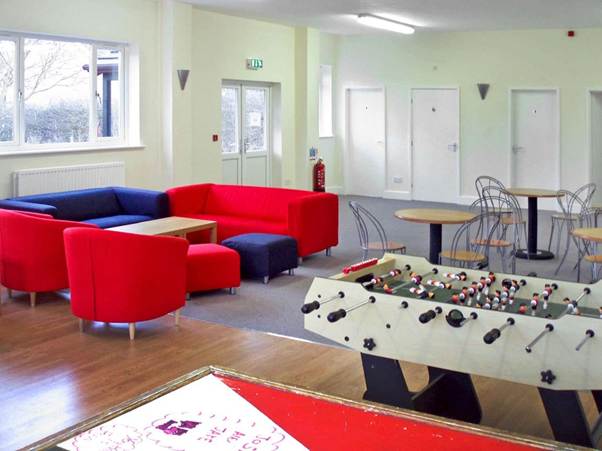
    Minimum needs:

    • Warm
    • Safe
    • Toilets
    • Kitchen or tea station
    • Storage
    • Flexible seating
    • Open space

    Luxury is unnecessary.

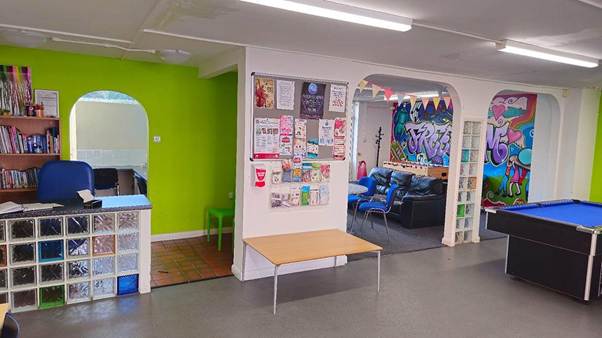
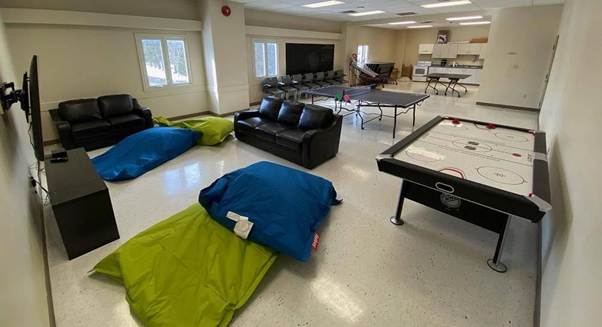
    A cold hall with a kettle and pool table beats no space at all.

    4


    Step 4: Hire the right adults first

    This is the single most important step.

    Emma is blunt:
    Buildings without youth workers stay closed.

    Great youth workers:

    • Read social dynamics
    • Spot isolation
    • Notice conflict early
    • De-escalate tension
    • Welcome difficult young people
    • Hold boundaries without authoritarianism

    Skills needed:

    • Emotional intelligence
    • Trauma awareness
    • Safeguarding
    • Group facilitation
    • Conflict mediation
    • Patience

    Avoid over-programmed staff who only deliver workshops.

    Hire people who can hold space.

    Ideal staffing:

    • 1 experienced youth worker (paid)
    • 2–5 trained volunteers
    • Specialist sessional mentors

    Ratio:
    1 adult per 8–12 regular attendees.


    Step 5: Build trust through “automatic positive regard”

    Emma repeatedly stresses acceptance.

    Every young person entering should feel:

    • Not judged
    • Not labelled
    • Not interrogated
    • Not reduced to risk factors

    Instead of:

    • Why are you here?
    • Are you in trouble?
    • Fill in this form

    Use:

    • Hi, welcome
    • What’s your name?
    • Tea?
    • Fancy a game?
    • What are you into?

    This creates belonging.

    The first 30 seconds matter.


    Step 6: Make “hanging out” legitimate

    Many adults make a fatal mistake:

    They think every minute needs purpose.

    Wrong.

    Youth clubs need structured unstructured time.

    Allow:

    • Chatting
    • Music
    • Pool
    • Ping pong
    • Gaming
    • Quiet sitting
    • Doing nothing

    Why?

    Because informal interaction is where:

    • trust develops
    • mentoring happens
    • problems surface naturally

    Conversation often starts during boredom.


    Step 7: Offer low-barrier activities

    Activities should invite participation, not intimidate.

    Good starter activities:

    • Pool
    • Table tennis
    • Board games
    • Music production
    • Podcasting
    • Cooking
    • Gardening
    • Street dance
    • Football
    • Art
    • Film nights
    • Repair workshops

    Avoid expensive specialist equipment initially.

    Start simple.

    Emma’s point about table tennis is revealing:
    Small activities can create lifelong culture.

    Table tennis is ideal because:

    • cheap
    • social
    • cross-age
    • inclusive

    Step 8: Feed people

    Never underestimate food.

    Food does several things:

    • reduces tension
    • attracts attendance
    • helps vulnerable teens
    • creates ritual
    • encourages conversation

    Provide:

    • toast
    • fruit
    • sandwiches
    • soup
    • hot drinks

    Some young people arrive hungry.

    A sandwich can be more impactful than a workshop.


    Step 9: Co-create with young people

    Don’t design everything from above.

    Ask:

    • What do you want here?
    • What should we change?
    • What events would you run?

    Let them shape:

    • rules
    • décor
    • playlists
    • activities
    • club identity

    Ownership increases retention.


    Step 10: Create culture, not just services

    Long-lasting clubs become identity-forming.

    They develop:

    • rituals
    • stories
    • inside jokes
    • traditions
    • alumni pride

    Examples:

    • annual talent night
    • mural wall
    • club magazine
    • music showcase
    • football tournament
    • volunteering ladder

    The club should become:

    “the place I grew up.”

    That creates generational longevity.


    Step 11: Build safeguarding and boundaries

    Warmth without boundaries fails.

    Set clear expectations:

    • Respect people
    • No violence
    • No harassment
    • No drugs onsite
    • No bullying

    Have written:

    • safeguarding policy
    • incident procedures
    • escalation pathways
    • volunteer code

    Serious safeguarding needs links to:

    • schools
    • social workers
    • NHS services
    • police liaison (carefully)

    Given your NHS context, mental health referral pathways matter.

    National Health Service


    Step 12: Diversify funding

    Youth clubs die when reliant on one grant.

    Aim for mixed income:

    Public

    • council grants
    • lottery funds
    • government youth funds

    Philanthropy

    • local donors
    • foundations
    • trusts

    Community

    • memberships (£1–£3 optional)
    • fundraising events
    • donations

    Enterprise

    • café
    • room hire
    • workshops
    • corporate sponsorship

    Rule:
    No single source >40% of revenue.


    Step 13: Measure what matters

    Emma warns against shallow metrics.

    Avoid only measuring:

    • attendance
    • sessions delivered
    • demographics

    Track long-term outcomes too:

    Quantitative:

    • retention
    • school attendance
    • exclusions
    • volunteering

    Qualitative:

    • confidence
    • belonging
    • resilience
    • testimonials
    • alumni stories

    Best question:
    Who came back years later, and what changed?


    Step 14: Build alumni and succession

    Many clubs fail when founders leave.

    Create succession early.

    Develop:

    • youth leaders
    • volunteer pipeline
    • governance board
    • trustee rotation
    • alumni mentors

    Best model:
    Teen attendee → volunteer → youth worker.

    That creates cultural continuity.


    Step 15: Commit for decades, not projects

    This is the hardest lesson.

    Youth clubs fail when treated as:

    • 12-month interventions
    • short grants
    • temporary experiments

    Emma’s ideal youth service is built around one idea:

    Trusted adults in stable places for a very long time.

    Think in:

    • 10 years
    • 20 years
    • generations

    Not quarters.


    Minimal Launch Model (if starting small)

    You can start with:

    • One hall
    • Two trained adults
    • One evening/week
    • Pool table or ping pong
    • Tea + sandwiches
    • £8–15k annual budget

    That is enough to begin.


    The Golden Rule

    If you remember only one thing:

    Young people rarely need more lectures.
    They need places where they feel welcomed, seen, challenged, and valued.

    That is what makes a youth club last.

  • National Framework for Creativity-Centric Education

    ENTRY ID: GSTIA-CREATIVITY-001
    Date added: 28/06/2026
    Entry status: [ ] Draft [ ] Under review [x] Published
    Submitted by: GSTIA Knowledge Curation Team


    1. Solution Title

    National Framework for Creativity-Centric Education


    2. Step-by-Step Implementation Guide

    A sequenced, actionable guide for a national government, ministry, or statutory body seeking to implement this solution. Steps should be in logical dependency order – later steps assume earlier ones are complete or underway.

    Step 1 – Establish a National Commission on Creativity and Education
    Form a cross-sectoral body comprising educators, business leaders, artists, scientists, and psychologists. Its mandate is to conduct a comprehensive review of the national curriculum and advise on the transition from the current industrial/academic model to a balanced, creativity-centric framework. This body should challenge the “academic illusion” that equates education solely with propositional knowledge and logico-deductive reasoning .

    Step 2 – Re-balance the Curriculum Hierarchy
    Dismantle the rigid hierarchy of subjects that places mathematics and languages at the apex and the arts at the bottom. This requires a formal policy stating that all subjects—including dance, drama, music, and the visual arts—are of equal educational value. This is not about devaluing traditional disciplines, but about correcting a systemic bias that marginalises vital forms of intelligence, such as kinesthetic and aesthetic thinking .

    Step 3 – Reform Assessment and Testing
    Move away from high-stakes, standardised testing as the primary measure of student and school success. Replace it with a broader assessment framework that includes portfolios of work, project-based evaluations, and peer review. This is critical because the current system “educates people out of their creative capacities” by stigmatising mistakes and rewarding only predictable, “correct” answers .

    Step 4 – Invest in Teacher Training and Development
    Teachers must be equipped to foster creativity, not just transmit knowledge. National teacher training programmes should be redesigned to include modules on creative pedagogy, recognizing diverse talents, and facilitating collaborative learning. Robinson argues that teachers should be “creative leaders” who set a climate for innovation, rather than function as command-and-control figures .

    Step 5 – Integrate Creativity Across All Subjects
    Mandate that creativity is not confined to art class but is a core skill to be developed in all disciplines. For instance, teaching science should involve experimental design and open-ended inquiry, not just the memorisation of facts. This operationalises Robinson’s definition of creativity as the “process of having original ideas that have value” .

    Step 6 – Foster a Whole-School Culture of Innovation
    Develop national guidelines for schools to operate as “organic” communities rather than “mechanistic” systems. This involves encouraging risk-taking, collaboration among staff, and bottom-up innovation from teachers. “The role of a creative leader is not ‘command and control’, it’s more like ‘climate control’” .

    Step 7 – Establish Regional Creative Learning Networks
    Create regional hubs that connect schools with local cultural institutions, businesses, and community organisations. These networks should facilitate the sharing of best practices, resources, and partnerships. Robinson emphasises that “education, business and the cultural sector face many common challenges [that] are compounded by the fact that they have so little contact with each other” .

    Step 8 – Develop National Creative Credentials
    Work with employers and higher education institutions to develop alternative credentials that recognise creative achievement alongside academic qualifications. This addresses “academic inflation” and ensures that creative abilities are valued in the job market. As Robinson notes, “the market value of degrees is tumbling. Something more is needed to edge ahead of the crowd” .

    Step 9 – Launch a National Public Awareness Campaign
    Promote the value of creativity through a sustained media campaign featuring successful individuals from diverse fields. This challenges the misconception that creativity is only for “special people” or “special activities” and encourages parents and communities to value diverse talents .

    Step 10 – Establish a National Creativity Research and Evaluation Unit
    Create a dedicated unit to monitor implementation, evaluate outcomes, and conduct ongoing research into creative pedagogy. This ensures the framework remains evidence-based and adaptable. The unit should report annually to parliament and the public .


    3. Polycrisis Strand(s)

    Select all that apply. For compound solutions, rank primary strand first. These 16 strands are the stable website navigation tags – use them as written. They are distinct from the Dewey Decimal classification in Section 5, which remains the permanent, externally citable reference.

    Primary strand: Education
    Interaction effects with other strands: This solution directly addresses Inequality by creating more equitable opportunities for diverse talents, reducing the educational attainment gap that disproportionately affects marginalised communities. It builds resilience against Digital infrastructure and AI disruption by developing uniquely human skills of creativity and adaptability that cannot be automated. It strengthens Governance, peace and conflict by fostering engaged, critical citizens capable of collaborative problem-solving and democratic participation. It supports Economic resilience by creating a more adaptable workforce capable of innovation in response to changing labour markets.


    4. Scale Category

    ScalePrimary?Enabling role?
    IndividualYes
    Family / HouseholdYes
    Community / VillageYes
    City / RegionYes
    Nation StateYes
    GlobalYes

    Notes on scale interaction: This is a national framework requiring policy changes at ministerial level. Its successful implementation depends on enabling community-level and school-level autonomy, as Robinson argues that real change often comes “from the ground up, not from the top down” . International exchange of best practices and research is essential for ongoing development.


    5. Dewey Decimal Classification

    Primary DDC: 370.1 — Education: Philosophy and theory
    Secondary DDC(s): 153.35 — Creativity and creative thinking; 371.102 — Teaching and teaching skills; 379 — Public policy issues in education
    Subject headings (LC or local): Educational change; Creative ability — Study and teaching; Educational reform; Holistic education; Curriculum planning — Government policy.


    6. Regional Applicability

    Evidenced implementations: Multiple U.S. school districts with progressive arts programmes; progressive schools in the UK (e.g., the Bradford Dance Academy model); the Finnish education system (known for its holistic, less test-focused approach); and various European countries with strong arts education traditions. Robinson cites examples globally in Out of Our Minds and Creative Schools.
    Climatic/geographic scope: [ ] Tropical [ ] Temperate [ ] Arid [ ] Arctic/sub-arctic [ ] Coastal [x] All
    Political economy prerequisites: Requires political will to move beyond the “standards culture” and standardised testing regimes. The ministry must be willing to grant greater autonomy to local schools and educators. A functioning national education infrastructure is essential.
    Contraindications: Likely to face strong resistance from existing testing industries and political factions that view education solely as a pathway to measurable economic output. The book argues that these interests are a major obstacle to reform . May be difficult to implement in countries with highly centralised systems that lack local autonomy.


    7. Cost Estimate

    Cost tierIndicative rangeBasis
    Pilot / proof of concept£5m – £20mImplementation in 50-100 pilot schools across different regions. Costs include teacher training, curriculum development, and programme evaluation.
    Community-scale deployment£50m – £200mScaling the pilot to a regional level (e.g., a state or province).
    City/regional scale£200m – £1bnFull rollout across a major city or several regions.
    National rollout£1bn – £5bn+Full national implementation over a 5-10 year period.

    Cost notes: Primary costs are for teacher training and curriculum redesign, rather than physical infrastructure. Savings in the medium term may come from reduced drop-out rates, lower youth unemployment, and a more innovative economy. Costs can be offset by reallocating existing education budgets (moving funds from testing to teaching) and by reducing expenditure on remedial and criminal justice systems.
    Funding mechanisms used in existing implementations: State education budgets (reallocation); National government innovation grants; International development funding (for low-income countries); Public-private partnerships with creative industries.


    8. Timescale Estimate

    Time to initial implementation: 6-12 months (to establish commission and design framework).
    Time to measurable impact: 3-5 years (changes in student engagement, teacher satisfaction, and soft skills).
    Time horizon of full benefit: 10-25 years (a generational shift in the workforce and society).
    Short-term vs long-term tension note: Mandatory — There is a significant short-term cost and political risk in moving away from standardised testing, which provides easily measurable data for politicians. Current actors (politicians, testing companies, some parents) bear the cost of transition and may experience uncertainty during the reform period. However, the long-term benefits of a creative, adaptable, and fulfilled population are immeasurable and essential for national resilience and prosperity. Robinson argues that “we will not succeed in navigating the complex environment of the future by peering relentlessly into a rear-view mirror” .


    9. Evidence Base

    Primary source(s): Robinson, K. (2011). Out of Our Minds: Learning to be Creative (2nd ed.). Capstone. ; Robinson, K., & Aronica, L. (2015). Creative Schools: The Grassroots Revolution That’s Transforming Education. Viking. ; Robinson, K. (2006). Do Schools Kill Creativity? [Video]. TED Conferences. ; The Bradford Dance Academy case study (Chapter 5) ; OECD education reports on creativity and innovation in education.
    Evidence quality: [ ] Peer-reviewed [x] Grey literature [x] Practitioner case study [ ] Modelled projection
    Known counter-evidence or limitations: The approach is non-prescriptive, making it difficult to implement in highly centralised systems that lack local autonomy. The “evidence base” is largely qualitative and based on case studies from progressive schools (e.g., the Bradford Dance Academy), which may not be easily replicable in under-resourced schools. Quantitative evidence linking creativity education to long-term economic outcomes is limited. Implementation requires sustained political commitment across multiple election cycles, which is challenging to maintain.
    Supporting media (external links only): [Optional. Link to photographs, video, diagrams, or data visualisations hosted on the source organisation’s own site, a reputable media outlet, or an official project page. Do not upload or embed images directly – the library links to evidence, it does not host it. For each link, note in one phrase what it shows and who hosts it.]


    10. Implementation Indicators

    Output indicators: Number of teachers trained in creative pedagogy; Number of schools implementing the new curriculum; Percentage of curriculum time allocated to arts and humanities; Number of regional Creative Learning Networks established; Number of alternative credentials developed and recognised.
    Outcome indicators: Rates of student disaffection and drop-outs; Youth employment rates; National innovation indices (e.g., patent applications, new business starts); Student self-assessment of creativity and well-being; Teacher retention and satisfaction rates; International comparisons of creative and critical thinking skills (e.g., PISA creative thinking assessments).
    Reporting mechanism: National annual education reports including both quantitative measures and qualitative case studies (interviews with students, teachers, parents, employers). The National Creativity Research and Evaluation Unit should produce an annual public report to parliament.


    11. Related Entries

    • GSTIA-CREATIVITY-002 : Personal Creativity Reclamation Protocol (for individual development)
    • GSTIA-CREATIVITY-003 : City-Wide Creative Learning Ecosystem (for urban implementation)
    • GSTIA-CREATIVITY-004 : Community-Based Creative Resilience Programme (for local implementation)
    • GSTIA-COMMUNITY-003 : Community Arts and Youth Diversion (based on the Bradford Dance Academy model)

    GSTIA Open Library entries are curated, not peer-reviewed in the academic sense. The institute’s commitment is to honest, evidence-grounded representation of what works, where, at what cost, and over what timescale – including where the evidence is weak or contested.

  • Community-Based Creative Resilience Programme

    ENTRY ID: GSTIA-CREATIVITY-004
    Date added: 28/06/2026
    Entry status: [ ] Draft [ ] Under review [x] Published
    Submitted by: GSTIA Knowledge Curation Team


    1. Solution Title

    Community-Based Creative Resilience Programme


    2. Step-by-Step Implementation Guide

    A sequenced, actionable guide for a national government, ministry, or statutory body seeking to implement this solution. Steps should be in logical dependency order – later steps assume earlier ones are complete or underway.

    Step 1 – Convene a Community Creative Assembly
    Gather a diverse cross-section of the community—residents, local artists, educators, youth workers, faith leaders, business owners, and representatives from local services (e.g., police, health, housing). The purpose is to establish a shared vision for how creativity can address local challenges. Robinson emphasises that communities are “created by people and they need to be constantly re-created if they are to survive” . This assembly creates the foundational relationships and collective ownership necessary for the programme’s success.

    Step 2 – Map Community Assets and Aspirations
    Conduct a participatory asset-mapping exercise, identifying existing creative resources (e.g., community centres, parks, libraries, empty shops, local artists, musicians, storytellers, elders with traditional skills). Crucially, also document residents’ aspirations and local challenges (e.g., youth disaffection, isolation of elderly, lack of safe spaces, unemployment). This aligns with Robinson’s principle that “we all have great natural capacities, but we all have them differently” and that any community programme must begin by understanding its own unique ecology.

    Step 3 – Identify and Train Local “Creative Champions”
    Recruit and train a team of local residents to serve as Creative Champions. These individuals should be trusted community members with a passion for creative engagement (not necessarily professional artists). Provide them with basic training in facilitation, group dynamics, and project management. Robinson argues that “helping people to connect with their personal creative capacities is the surest way to release the best they have to offer” . This peer-to-peer model builds local capacity and sustainability.

    Step 4 – Establish a Neighbourhood Creative Space
    Secure a physical space within the community—a community centre, a local church hall, a vacant shop, or a converted shipping container. This should be a welcoming, accessible, and safe space equipped with basic creative materials (paper, paint, musical instruments, craft supplies, recycled materials). The space should be open and free to all. As Robinson notes, “creating the conditions where [creativity] will flourish” requires a supportive environment.

    Step 5 – Pilot “Creative Evenings” and Intergenerational Sessions
    Launch a regular programme of creative activities, including both open-access “Creative Evenings” (for adults) and dedicated intergenerational sessions where older and younger participants can share and learn together. Activities should be varied—storytelling, music-making, visual arts, gardening, cooking. Robinson highlights that “creativity is a multi-faceted process” that can be expressed through “many ordinary abilities and some specialised skills” . Variety ensures broad appeal.

    Step 6 – Develop a Community-Led Arts-Based Intervention for Disaffected Youth
    Adapt the Bradford Dance Academy model to the local context by creating a structured, arts-based programme for young people disengaged from school or at risk of offending. This should be a co-designed, high-expectation programme that treats participants as “professional artists in training” rather than “cases.” The programme should culminate in a public performance or exhibition. Robinson’s account demonstrates this approach can lead to “remarkable” transformations in just “three weeks” .

    Step 7 – Launch a Community Storytelling Archive
    Establish a programme that collects and shares local stories, histories, and cultural traditions through oral history projects, community archives, murals, or a local podcast series. This builds on Robinson’s observation that “the human world is created out of our minds as much as from the natural environment” and that communities are built through shared narratives and meaning-making.

    Step 8 – Create “Creative Living” Networks
    Establish peer networks and local exchange systems that sustain creative practices—a skills exchange (e.g., “I’ll teach you guitar if you teach me painting”), a community garden, a tool-lending library, or a regular community market for local crafts. This embeds creativity into everyday life.

    Step 9 – Celebrate Local Creative Achievements
    Hold a regular community celebration (e.g., a quarterly Creative Showcase) to share the work produced. This is a powerful motivator, as demonstrated by the Bradford Academy, where the “public performance at the end of the first three weeks is a massive step” providing “the first time that they’ll be seen in a positive light” .

    Step 10 – Embed and Sustain Through Local Governance
    Work with the local government (parish council, neighbourhood association, etc.) to embed the programme’s principles into long-term community planning—forming a permanent community creativity committee, securing ongoing funding, and creating a formal “Creative Residents” role. Robinson warns that “governments and businesses throughout the world recognise that education and training are the keys to the future,” but this recognition must translate into sustained local action .


    3. Polycrisis Strand(s)

    Select all that apply. For compound solutions, rank primary strand first. These 16 strands are the stable website navigation tags – use them as written. They are distinct from the Dewey Decimal classification in Section 5, which remains the permanent, externally citable reference.

    • Population growth
    • Urbanisation and migration
    • Industrial output
    • Energy and mineral resources
    • Transport and mobility
    • Globalisation and finance
    • Land and soil systems
    • Water systems
    • Climate change
    • Biodiversity loss
    • Pollution, toxics and waste
    • Digital infrastructure and AI
    • Food, health and disease
    • Inequality
    • Education
    • Governance, peace and conflict

    Primary strand: Education
    Interaction effects with other strands: This programme directly addresses social isolation and community fragmentation, rebuilding trust and mutual support essential for resilience against Inequality and Governance failure. It mitigates Urbanisation and migration effects by providing low-cost opportunities for skill development, self-expression, and meaningful participation in increasingly diverse communities. It can incorporate ecological themes (community gardens, crafts from recycled materials), linking to Climate change and Land and soil systems. The intergenerational element addresses Population growth dynamics by connecting generations.


    4. Scale Category

    ScalePrimary?Enabling role?
    IndividualYes
    Family / HouseholdYes
    Community / VillageYes
    City / RegionYes
    Nation State
    Global

    Notes on scale interaction: This is a community-level initiative most effective when supported by enabling city and regional policies (access to spaces, funding, permissive frameworks). It depends on individual participation and household-level support. In Robinson’s terms, it is change that must “come from the ground up” .


    5. Dewey Decimal Classification

    Primary DDC: 307.3 — Social structure and community
    Secondary DDC(s): 153.35 — Creativity and creative thinking; 302.1 — Social interaction and community development; 361.8 — Community action and social work
    Subject headings (LC or local): Community development; Creative ability — Social aspects; Arts and society; Community arts projects; Social integration.


    6. Regional Applicability

    Evidenced implementations: The Bradford Dance Academy (UK) is a key example . Similar community arts programmes exist globally, including “community arts organizations” cited by Robinson across the U.S., UK, and Europe. Examples include the UK’s “Creative Partnerships” programme, the “Community Arts Network” in Australia, and numerous U.S. “arts and culture” community development programmes.
    Climatic/geographic scope: [ ] Tropical [ ] Temperate [ ] Arid [ ] Arctic/sub-arctic [ ] Coastal [x] All
    Political economy prerequisites: Requires a relatively stable local governance structure (or functioning community association). A local champion and a degree of social trust among community members are essential.
    Contraindications: Very high-conflict communities or those with extremely low social capital may find it difficult to initiate. In such cases, a phased approach, starting with a single trusted institution (e.g., a church or school), may be necessary.


    7. Cost Estimate

    Cost tierIndicative rangeBasis
    Pilot / proof of concept£5k – £25kEstablishing one Creative Space and running a pilot “Creative Evenings” programme for 6 months. Includes basic materials, small stipend for community organiser, promotional costs.
    Community-scale deployment£25k – £100kExpanding to full programme with Youth Diversion element, storytelling, networks, and 2-3 regular weekly activities.
    City/regional scale£100k – £500kReplicating the model across 5-10 neighbourhoods within a city.
    National rollout£5m – £50mScaling nationally across thousands of communities, with central coordination and training function.

    Cost notes: Costs primarily for modest staff support (part-time coordinator) and consumable materials. Model deliberately re-uses existing community infrastructure, avoiding costly new build. Relies heavily on volunteer time (Creative Champions).
    Funding mechanisms used in existing implementations: Local government community development grants; Lottery or philanthropic funding; Small corporate sponsorship (local businesses); Crowdfunding; In-kind donations (space, materials).


    8. Timescale Estimate

    Time to initial implementation: 1-3 months (to convene the assembly, map assets, and open a space).
    Time to measurable impact: 6-12 months (reduced social isolation, new community projects, increased youth engagement).
    Time horizon of full benefit: 3-5 years (a fundamental shift in community culture, resilience, and cohesion).
    Short-term vs long-term tension note: Mandatory — The model relies on voluntary effort and small amounts of funding. There is a risk of volunteer burnout and programme “attrition” if not carefully managed and sustained. Building community trust and participation takes time. However, the long-term benefit of a resilient, connected community capable of collaborative problem-solving is immeasurable and essential for navigating the polycrisis.


    9. Evidence Base

    Primary source(s): Robinson, K. (2011). Out of Our Minds: Learning to be Creative (2nd ed.). Capstone. ; The Bradford Dance Academy case study in Chapter 5 ; Robinson’s descriptions of “community arts organisations” in the U.S., UK, and Europe ; Various evaluations of community arts programmes (e.g., the UK’s “Creative Partnerships” programme; U.S. “Arts for All” initiatives).
    Evidence quality: [ ] Peer-reviewed [x] Grey literature [x] Practitioner case study [ ] Modelled projection
    Known counter-evidence or limitations: The evidence base for community arts programmes is often qualitative and consists of “case studies,” which can be difficult to generalise. Quantitative evidence of impact on crime or employment is limited and contested. The approach is highly context-dependent; what works in one community may not work in another. It relies on a “magic” factor of local leadership and community “buy-in” that is difficult to engineer from outside. Programmes can be fragile and vulnerable to changes in funding or local priorities.
    Supporting media (external links only): [Optional. Link to photographs, video, diagrams, or data visualisations hosted on the source organisation’s own site, a reputable media outlet, or an official project page. Do not upload or embed images directly – the library links to evidence, it does not host it. For each link, note in one phrase what it shows and who hosts it.]


    10. Implementation Indicators

    Output indicators: Number of Creative Champions trained; Number of community members engaged per week; Number of creative events held; Number of young people in youth diversion programme; Number of stories collected in community archive; Hours of volunteer time contributed.
    Outcome indicators: Self-reported social connectedness and well-being; Reduction in reported anti-social behaviour; Increase in school attendance/engagement (for participants); Number of new community-led initiatives; Degree of community cohesion (measurable through surveys).
    Reporting mechanism: A self-reporting model compiled by the Community Creative Assembly, including attendance records, participant testimonials, and a simple annual community survey. These can be reported to local partners and funders.


    11. Related Entries

    • GSTIA-CREATIVITY-001 : National Framework for Creativity-Centric Education
    • GSTIA-CREATIVITY-002 : Personal Creativity Reclamation Protocol
    • GSTIA-CREATIVITY-003 : City-Wide Creative Learning Ecosystem
    • GSTIA-COMMUNITY-003 : Community Arts and Youth Diversion (focused on the Bradford Dance Academy model)

    GSTIA Open Library entries are curated, not peer-reviewed in the academic sense. The institute’s commitment is to honest, evidence-grounded representation of what works, where, at what cost, and over what timescale – including where the evidence is weak or contested.

  • National Framework for Creativity-Centric Education

    ENTRY ID: GSTIA-CREATIVITY-001
    Date added: 19/06/2026
    Entry status: [ ] Draft [ ] Under review [x] Published
    Submitted by: GSTIA Knowledge Curation Team


    1. Solution Title

    National Framework for Creativity-Centric Education


    2. Step-by-Step Implementation Guide

    A sequenced, actionable guide for a national government, ministry, or statutory body seeking to implement this solution. Steps should be in logical dependency order — later steps assume earlier ones are complete or underway.

    Step 1 — Establish a National Commission on Creativity and Education
    A cross-sectoral body should be formed, comprising educators, business leaders, artists, scientists, and psychologists. Its mandate is to conduct a comprehensive review of the national curriculum and advise on the transition from the current industrial/academic model to a balanced, creativity-centric framework. This body should challenge the “academic illusion” that equates education solely with propositional knowledge and logico-deductive reasoning .

    Step 2 — Re-balance the Curriculum Hierarchy
    Dismantle the rigid hierarchy of subjects that places mathematics and languages at the apex and the arts at the bottom. This requires a formal policy stating that all subjects—including dance, drama, music, and the visual arts—are of equal educational value. This is not about devaluing traditional disciplines, but about correcting a systemic bias that marginalizes vital forms of intelligence, such as kinesthetic and aesthetic thinking .

    Step 3 — Reform Assessment and Testing
    Move away from high-stakes, standardized testing as the primary measure of student and school success. Replace it with a broader assessment framework that includes portfolios of work, project-based evaluations, and peer review. This is critical because the current system “educates people out of their creative capacities” by stigmatizing mistakes and rewarding only predictable, “correct” answers .

    Step 4 — Invest in Teacher Training and Development
    Teachers must be equipped to foster creativity, not just transmit knowledge. National teacher training programs should be redesigned to include modules on creative pedagogy, recognizing diverse talents, and facilitating collaborative learning. Robinson argues that teachers should be “creative leaders” who set a climate for innovation, rather than function as command-and-control figures .

    Step 5 — Integrate Creativity Across All Subjects
    The framework should mandate that creativity is not confined to art class but is a core skill to be developed in all disciplines. For instance, teaching science should involve experimental design and open-ended inquiry, not just the memorization of facts. This operationalizes Robinson’s definition of creativity as the “process of having original ideas that have value” .

    Step 6 — Foster a Whole-School Culture of Innovation
    Develop national guidelines for schools to operate as “organic” communities rather than “mechanistic” systems. This involves encouraging risk-taking, collaboration among staff, and bottom-up innovation from teachers. “The role of a creative leader is not ‘command and control’, it’s more like ‘climate control’” .

  • Green Marketing and Sustainability Communications for SMEs: Your Brand Differentiation Guide

    The Green Marketing Revolution Transforming SME Brand Strategy

    Sustainability communications have become a critical component of successful marketing strategies, with consumers increasingly making purchasing decisions based on environmental and social considerations. For small and medium enterprises, this shift presents both unprecedented opportunities to differentiate their brands and significant challenges in developing authentic, credible sustainability messaging that resonates with target audiences.

    The statistics surrounding consumer preferences for sustainable brands are compelling. Recent research indicates that 73% of global consumers are willing to pay more for sustainable products and services, while 81% of millennials expect companies to make public commitments to corporate citizenship. For SMEs, these trends represent substantial market opportunities that can drive growth and competitive advantage when addressed strategically.

    The challenge for SMEs is developing sustainability communications that are both authentic and effective. Unlike large corporations with dedicated marketing teams and substantial advertising budgets, small businesses must find cost-effective approaches to sustainability marketing that leverage their unique strengths while avoiding the pitfalls of greenwashing and consumer skepticism.

    The opportunity lies in the fact that SMEs often have inherent advantages in sustainability communications, including closer relationships with customers, greater operational transparency, and more authentic stories about their environmental and social commitments. Companies that successfully leverage these advantages can build stronger brand loyalty, attract environmentally conscious customers, and command premium pricing for their products and services.

    The Problem: Why SMEs Struggle with Effective Green Marketing

    Authenticity and Credibility Challenges

    The most significant challenge facing SMEs in sustainability communications is developing messaging that is both authentic and credible. Consumers have become increasingly sophisticated in evaluating sustainability claims and are quick to identify and reject marketing messages that appear to be greenwashing or superficial environmental positioning.

    Many SMEs struggle to identify and articulate their genuine sustainability strengths in ways that resonate with target audiences. While small businesses may have strong environmental and social practices, they often lack the expertise needed to translate these practices into compelling marketing messages that differentiate their brands and drive customer engagement.

    The complexity of sustainability issues creates additional challenges for SMEs in developing credible communications. Environmental and social impact claims require supporting data and verification that many small businesses do not possess. Without proper documentation and measurement, sustainability communications may appear unsubstantiated and fail to build consumer trust.

    The risk of greenwashing accusations is particularly concerning for SMEs that may lack the resources to defend their sustainability claims or recover from reputational damage. Small businesses need to ensure that their sustainability communications are accurate, verifiable, and aligned with their actual practices and performance.

    Resource Constraints and Expertise Gaps

    Effective sustainability communications require specialized knowledge of environmental and social issues, consumer psychology, and marketing strategy that many SMEs do not possess internally. Developing compelling sustainability messaging requires understanding of complex topics such as carbon footprints, supply chain impacts, and social responsibility that can be challenging for small business owners and marketing staff.

    The resource requirements for comprehensive sustainability communications can also be substantial, particularly for SMEs that need to invest in content development, design services, and marketing channels to reach their target audiences effectively. Professional photography, video production, and graphic design services can be expensive, while ongoing content creation and social media management require significant time investments.

    Many SMEs lack access to the data and measurement systems needed to support credible sustainability communications. Environmental impact assessments, social impact measurements, and sustainability performance tracking require specialized expertise and systems that may be beyond the capabilities of small business teams.

    The rapidly evolving nature of sustainability communications also creates challenges for SMEs in staying current with best practices, regulatory requirements, and consumer expectations. What constitutes effective sustainability marketing continues to evolve as consumer awareness increases and regulatory standards become more stringent.

    Market Positioning and Competitive Differentiation

    SMEs often struggle to identify and communicate their unique sustainability value propositions in ways that differentiate them from competitors and resonate with target customers. The proliferation of sustainability claims in the marketplace has created consumer confusion and skepticism that makes it difficult for authentic sustainability leaders to stand out.

    The challenge is compounded by the fact that many SMEs compete with larger companies that have substantial marketing budgets and sophisticated sustainability communications programs. Small businesses need to find creative approaches to sustainability marketing that leverage their unique strengths and connect with customers in ways that large corporations cannot replicate.

    Many SMEs also struggle with the balance between promoting their sustainability achievements and maintaining humility and authenticity in their communications. Overly promotional sustainability messaging can backfire and create consumer skepticism, while understated communications may fail to capture attention and drive business results.

    The complexity of sustainability issues also makes it difficult for SMEs to develop simple, clear messaging that consumers can easily understand and act upon. Effective sustainability communications must translate complex environmental and social concepts into accessible messages that motivate consumer behavior.

    The Solution: Strategic Sustainability Communications and Brand Development

    Authentic Sustainability Story Development

    Effective sustainability communications begin with identification and development of authentic sustainability stories that reflect the genuine values, practices, and impacts of the business. Professional sustainability communications consulting helps SMEs identify their unique sustainability strengths and translate them into compelling narratives that resonate with target audiences.

    The story development process typically includes assessment of current sustainability practices and performance, identification of unique sustainability value propositions and competitive advantages, development of authentic narratives that connect sustainability practices to business values and customer benefits, and creation of supporting content and messaging frameworks.

    Professional story development also includes evaluation of sustainability claims and supporting evidence to ensure that communications are accurate, verifiable, and aligned with actual performance. This process helps SMEs avoid greenwashing risks while maximizing the impact of their genuine sustainability achievements.

    The story development process considers different audience segments and communication channels to ensure that sustainability messaging is tailored to specific customer needs and preferences. This targeted approach helps maximize the effectiveness of sustainability communications while optimizing resource allocation.

    Integrated Marketing Strategy and Content Development

    Successful sustainability communications require integration with overall marketing strategy to ensure that environmental and social messaging supports broader business objectives and brand positioning. Professional sustainability marketing support helps SMEs develop comprehensive strategies that leverage sustainability as a competitive differentiator.

    Integrated marketing strategy development includes analysis of target audience sustainability preferences and behaviors, evaluation of competitive sustainability positioning and messaging, development of sustainability-focused value propositions and brand positioning, and creation of integrated marketing campaigns that incorporate sustainability themes.

    Content development services include creation of sustainability-focused marketing materials, development of digital content for websites and social media platforms, production of case studies and success stories that demonstrate sustainability impact, and preparation of sustainability reports and communications for stakeholders.

    Professional marketing support also includes guidance on sustainability marketing best practices, regulatory compliance requirements, and industry standards that help SMEs develop credible and effective communications while avoiding common pitfalls and risks.

    Performance Measurement and Optimization

    Effective sustainability communications require ongoing measurement and optimization to ensure that messaging resonates with target audiences and drives desired business outcomes. Professional sustainability marketing support includes development of measurement frameworks and optimization strategies that maximize the return on marketing investments.

    Performance measurement typically includes tracking of key performance indicators such as brand awareness, customer engagement, lead generation, and sales conversion rates for sustainability-focused marketing campaigns. This data provides insights into the effectiveness of different messaging approaches and communication channels.

    The measurement process also includes analysis of customer feedback, social media engagement, and market research data to understand how sustainability communications are perceived by target audiences. This feedback helps identify opportunities for message refinement and campaign optimization.

    Professional measurement support includes development of reporting systems that track the business impact of sustainability communications, identification of optimization opportunities based on performance data, and ongoing refinement of messaging and strategy based on market feedback and results.

    Success Story: Consulting Firm Wins Major Contracts Through Sustainability Positioning

    The Challenge

    Strategic Business Solutions, a 25-employee management consulting firm specializing in operational efficiency and process improvement, was struggling to differentiate itself in an increasingly competitive market. The firm competed primarily on expertise and price, but found that these traditional differentiators were becoming less effective as the consulting market became more crowded and commoditized.

    The challenge became particularly acute when the firm lost two major contract opportunities to competitors who emphasized their sustainability expertise and environmental consulting capabilities. The prospective clients specifically cited sustainability considerations as factors in their vendor selection decisions, highlighting a gap in Strategic Business Solutions’ market positioning.

    Founder and CEO Jennifer Park recognized that sustainability was becoming an increasingly important consideration for clients across all industries, but was unsure how to position her firm’s capabilities in this area. While Strategic Business Solutions had always helped clients improve operational efficiency, which often resulted in environmental benefits, the firm had never explicitly marketed these sustainability outcomes.

    Park was particularly concerned about the authenticity and credibility of potential sustainability positioning. She wanted to avoid greenwashing accusations while leveraging the genuine environmental benefits that resulted from the firm’s operational improvement work. The challenge was identifying and articulating these benefits in ways that would resonate with environmentally conscious clients.

    The firm had limited marketing resources and no dedicated sustainability expertise, making it difficult to develop and implement comprehensive sustainability communications. Park needed to find cost-effective approaches to sustainability marketing that would differentiate Strategic Business Solutions without requiring substantial investments in new capabilities or resources.

    The Solution Implementation

    Recognizing the strategic importance of sustainability positioning for competitive differentiation, Park engaged Green Communications Partners, a consulting firm specializing in sustainability marketing for professional services companies. The engagement began with comprehensive assessment of Strategic Business Solutions’ existing capabilities and client outcomes to identify authentic sustainability value propositions.

    The assessment revealed that Strategic Business Solutions’ operational improvement work consistently delivered significant environmental benefits for clients, including energy savings, waste reduction, and resource efficiency improvements. However, these benefits had never been systematically measured, documented, or communicated as part of the firm’s value proposition.

    The consulting team worked with Strategic Business Solutions to develop a comprehensive sustainability positioning strategy that positioned the firm as “operational efficiency experts who deliver environmental impact.” This positioning leveraged the firm’s existing expertise while highlighting the sustainability outcomes that resulted from their work.

    The positioning strategy included development of new service offerings that explicitly focused on sustainability outcomes, creation of case studies that documented the environmental benefits of previous client engagements, and implementation of measurement systems that tracked and reported sustainability impacts for all client projects.

    The marketing implementation included redesign of the firm’s website to highlight sustainability expertise and outcomes, development of thought leadership content that positioned the firm as experts in sustainable operations, and creation of sales materials that emphasized environmental benefits alongside traditional operational improvements.

    The firm also implemented new client engagement processes that included sustainability impact assessment and reporting as standard components of all consulting projects. This approach ensured that sustainability benefits were consistently identified, measured, and communicated to clients.

    The Results and Impact

    The sustainability positioning strategy delivered remarkable results that exceeded all expectations. Within 18 months of implementation, Strategic Business Solutions secured five major contracts specifically citing the firm’s sustainability expertise as a key selection criterion. These contracts represented over $800,000 in new revenue and established the firm as a recognized leader in sustainable operations consulting.

    The sustainability positioning also enabled the firm to command premium pricing for their services. Clients were willing to pay 15-20% higher fees for consulting services that delivered documented environmental benefits alongside operational improvements. This pricing premium significantly improved the firm’s profitability and competitive positioning.

    The thought leadership content and case studies generated substantial market visibility and lead generation. The firm’s sustainability-focused articles and presentations attracted attention from industry publications and conference organizers, resulting in speaking opportunities and media coverage that enhanced brand recognition and credibility.

    Perhaps most importantly, the sustainability positioning attracted higher-quality clients who were committed to environmental responsibility and willing to invest in comprehensive improvement initiatives. These clients typically engaged Strategic Business Solutions for longer-term projects and provided referrals to other sustainability-focused organizations.

    The sustainability focus also had positive impacts on employee engagement and recruitment. The firm attracted several experienced consultants who were specifically interested in working on sustainability-focused projects, enhancing the team’s capabilities and expertise in this growing market segment.

    Long-Term Strategic Benefits

    The success of the sustainability positioning has established Strategic Business Solutions as a recognized leader in sustainable operations consulting within their regional market. The firm now receives regular inquiries from organizations seeking sustainability-focused consulting services and has developed a strong reputation for delivering measurable environmental outcomes.

    The sustainability expertise has also opened new market opportunities and service offerings. The firm has expanded into sustainability strategy development, environmental management system implementation, and carbon footprint reduction consulting, diversifying their revenue streams and reducing dependence on traditional operational consulting.

    Park credits the sustainability positioning with transforming Strategic Business Solutions from a commodity consulting firm to a specialized sustainability leader. “The sustainability focus helped us differentiate ourselves in a crowded market while staying true to our core expertise,” she explains. “We’re now known for delivering both operational excellence and environmental impact.”

    The success of the sustainability positioning has led Strategic Business Solutions to expand their sustainability capabilities through partnerships with environmental consultants and certification in sustainability frameworks. The firm is now pursuing B Corporation certification and exploring opportunities for international sustainability consulting projects.

    Conclusion: Sustainability Communications as Growth Driver for SMEs

    Sustainability communications represent a powerful opportunity for SMEs to differentiate their brands, attract environmentally conscious customers, and drive business growth through authentic environmental and social messaging. The key to success is developing communications strategies that are both genuine and compelling, leveraging the unique strengths and stories that small businesses possess.

    Professional sustainability communications support provides SMEs with the expertise and resources needed to develop effective green marketing strategies while avoiding the pitfalls of greenwashing and consumer skepticism. The investment in professional communications consulting typically generates returns through improved brand positioning, customer acquisition, and premium pricing opportunities.

    For SME leaders considering sustainability communications initiatives, the question is not whether to incorporate environmental and social messaging into their marketing, but how to do so authentically and effectively. The companies that develop comprehensive sustainability communications strategies now will be best positioned to capitalize on the growing consumer demand for sustainable products and services.

    The future belongs to businesses that can demonstrate authentic commitment to sustainability through transparent communications and measurable impact. SMEs that embrace sustainability communications as a strategic marketing tool will find that it enhances rather than constrains their growth and competitiveness while contributing to broader environmental and social goals.

  • The Garden Gang’s Greatest Day

    The garden grows beneath the sun,
    As families join to share the fun.
    With spades and forks we turn the earth,
    Creating plots of untold worth.
    The children plant their favourite seeds,
    While learning how to tackle weeds.
    Together working side by side,
    We nurture growth with shared pride.

    Ruben stood in the community garden, clutching his megaphone like it was made of solid gold. At seventeen, he’d finally convinced the Garden Committee to let him organize the very first Family Gardening Day, and by golly, he wasn’t going to mess it up.


    “Right then, you wonderful lot!” he boomed through the megaphone, making several toddlers giggle and a few parents jump. “Welcome to Family Gardening Day! I’ve got more activities planned than a monkey has fleas!”


    The garden itself was a peculiar sight that morning. Ruben had set up different stations, each marked with a sign that looked like it had been painted by a colourblind artist who’d had too much coffee. The “Dig for Treasure” station featured buried plastic gems in the compost heap. The “Veggie Orchestra” had children making music with hollow carrots and cucumber drums. And the “Mud Masterpiece” corner… well, that was exactly what you’d expect – gloriously messy.
    “Now then,” Ruben continued, “who wants to learn the Secret Dance of the Successful Seeds?” He demonstrated by hopping on one foot while wiggling his arms like seaweed in a storm. To everyone’s surprise (especially his), all the children joined in, followed by their parents, until the entire garden looked like it was full of squirming, laughing vegetables.


    Little Tommy Peterson, age six and three-quarters, discovered that worms make excellent racing competitors (though they rarely go in the right direction). Sarah Jenkins found out that radishes don’t actually taste like red crayons (much to her disappointment). And Mrs. Butterworth, who everyone thought was far too posh for gardening, turned out to be an expert at making mud pies decorated with marigold petals.


    The day whizzed by faster than a caffeinated hummingbird. By sunset, every family had their own little plot planted, complete with wobbling name signs and possibly the most creative arrangement of vegetables anyone had ever seen. (Someone had planted carrots in the shape of a giraffe – though how they’d manage to make them grow that way remained a mystery.)


    As everyone headed home, covered in dirt and wearing smiles wider than watermelon slices, Ruben heard snippets of conversation: “Can we do this again tomorrow?” “Look, Mum, my sunflower seed is already growing!” (It wasn’t, but nobody had the heart to say so.) “I never knew gardening could be this fun!”
    Ruben grinned, his face smudged with soil and pride. He’d done it. He’d really done it. And as he packed away his megaphone, he could have sworn he heard the vegetables cheering.


    The End


    (And if you’re wondering whether the giraffe-shaped carrots ever grew – well, that’s another story entirely…)

    Reflections

    1. How does Ruben’s creative approach to garden activities help engage different age groups in the community?
    2. What role does humor play in making the gardening experience more accessible and enjoyable for children?
    3. How does the story demonstrate the transformation of participants’ attitudes toward gardening throughout the day?
    4. What specific details in the story reflect Roald Dahl’s characteristic writing style?
    5. How does the community garden setting serve as a catalyst for building connections between families?
  • Ruben’s Soil Regeneration Journey

    A Day in the Life: Ruben’s Soil Regeneration Journey

    In the year 2050, Sheffield, UK, had transformed into a vibrant, low-energy, low-resource utopia. The city, once bustling with the hum of oil-powered machinery, now thrived on the rhythm of human hands and the wisdom of the past. Here, in this new world, young Ruben, a curious 17-year-old, embarked on a journey to learn the art of soil regeneration, spending two days a week on a local project that was part of the city’s broader commitment to sustainable agriculture.

    The morning sun filtered through the windows of the community garden, casting a warm glow on the rows of raised beds and the bustling activity of volunteers. Ruben arrived, his backpack slung over one shoulder, filled with enthusiasm and a notebook for sketches.

    “Morning, Ruben!” called out Sarah, the project coordinator, her voice echoing in the quiet space.

    Ruben waved back, setting his bag down. “Morning, Sarah! Ready to get my hands dirty today!”

    Sarah chuckled, “Absolutely! We’ve got a lot to do. Today, we’re focusing on the lasagne bed method. You’ll love it.”

    They spent the morning discussing the different layers of organic material that would be used to create a rich, fertile soil. Sarah showed Ruben how to layer cardboard, compost, leaves, and grass clippings, explaining, “You see, Ruben, in this world, we’ve learned to listen to nature. Each layer has its own role, its own story, and together, they create a symphony of soil health.”

    As noon approached, they took a break, sitting under the shade of an old oak tree with cups of herbal tea, a luxury in this energy-conscious world. “You know, Ruben,” Sarah began, “in my younger days, we had machines for everything. But now, we’ve returned to the hands, to the craft. It’s slower, but it’s richer.”

    Ruben listened intently, his mind racing with the possibilities of what he could create. After lunch, they moved to the practical part. Sarah handed Ruben a garden fork and a pile of compost. “Now, let’s start building our lasagne bed. Remember, it’s not just about layering; it’s about feeling the soil, understanding its needs.”

    The afternoon was filled with the sound of forks meeting soil, the scent of compost, and the occasional laughter as Ruben made his first, somewhat clumsy, layers. Sarah guided him patiently, showing him how to incorporate cover crops like clover and buckwheat to fix nitrogen and protect the soil from erosion.

    As the day turned into evening, they paused for a moment. Sarah looked at Ruben, her eyes reflecting the pride of a mentor. “You’ve done well today, Ruben. This is just the beginning. You’ll learn to make the soil sing, just like the old ones did.”

    Ruben smiled, his hands stained with soil and sweat. “Thanks, Sarah. I feel like I’m not just learning to regenerate soil; I’m learning about life, about patience, and about the stories we tell through our hands.”

    Sarah nodded, “That’s the beauty of it, lad. In this world, we’ve learned that the real wealth isn’t in oil or machines, but in the skills we pass down, the stories we share, and the community we build.”

    As they cleaned up, Ruben asked, “What’s next, Sarah?”

    “Next, we’ll work on the no-dig method, and then we’ll start planting. But for now, let’s call it a day. Tomorrow, we’ll continue, and you’ll see how the soil starts to come alive.”

    With a promise to return the next day, Ruben left the community garden, his mind buzzing with the day’s lessons. In this post-oil utopia, where resources were scarce but creativity abundant, Ruben was not just learning a craft; he was becoming part of a legacy, a bridge between generations, where the wisdom of the hands was the currency of the future.

    The following morning, Ruben returned to the community garden, eager to continue his journey. The sun was already high in the sky, casting long shadows over the garden beds. Sarah greeted him with a smile, “Morning, Ruben! Today, we’re diving into the no-dig method. It’s all about preserving the soil structure and promoting microbial life.”

    They started by laying down a thick layer of cardboard over the existing soil, smothering any weeds and creating a barrier for new growth. Ruben watched as Sarah explained, “This cardboard will decompose over time, adding organic matter to the soil without disturbing its natural layers.”

    Next, they added a mix of compost, leaves, and grass clippings, creating a nutrient-rich environment for the plants to thrive. Ruben, now more confident, took the lead in spreading the layers evenly, ensuring each one was thick enough to support the growth of vegetables and herbs.

    As they worked, Sarah shared stories of how the community had transformed the once barren land into a thriving ecosystem. “We’ve learned to work with nature, not against it,” she said, her voice filled with pride. “This garden is a testament to what we can achieve when we respect the earth.”

    After a few hours of layering, they took a break, sitting on a bench overlooking the garden. Ruben sipped on his herbal tea, his mind filled with the day’s lessons. “It’s amazing how much we can do with just our hands and some organic materials,” he remarked.

    Sarah nodded, “That’s the beauty of it, Ruben. In this world, we’ve learned that the real wealth isn’t in oil or machines, but in the skills we pass down, the stories we share, and the community we build.”

    The afternoon was spent planting. Ruben, under Sarah’s guidance, carefully placed seedlings into the newly created beds. They planted tomatoes, peppers, beans, and a variety of herbs, each with its own role in the garden’s ecosystem. Sarah explained how companion planting could deter pests and enhance growth, creating a balanced environment.

    As the sun began to set, casting a golden hue over the garden, Ruben and Sarah stood back to admire their work. “You’ve done well today, Ruben,” Sarah said, her eyes reflecting the pride of a mentor. “This is just the beginning. You’ll learn to make the soil sing, just like the old ones did.”

    Ruben smiled, his hands stained with soil and sweat. “Thanks, Sarah. I feel like I’m not just learning to regenerate soil; I’m learning about life, about patience, and about the stories we tell through our hands.”

    With a promise to return the next week, Ruben left the community garden, his mind buzzing with the day’s lessons. In this post-oil utopia, where resources were scarce but creativity abundant, Ruben was not just learning a craft; he was becoming part of a legacy, a bridge between generations, where the wisdom of the hands was the currency of the future.

    Citations:
    [1] https://foodtank.com/news/2018/05/organizations-feeding-healing-world-regenerative-agriculture-2/
    [2] https://www.homebiogas.com/blog/regenerative-gardening/
    [3] https://www.woodlandtrust.org.uk/support-us/act/volunteer-with-us/
    [4] https://forestsnews.cifor.org/88212/urban-kenyan-youth-get-their-hands-in-the-soil-on-world-environment-day?fnl=en
    [5] https://www.handinhandinternational.org/hand-in-hand-and-ikea-foundations-regenerative-agriculture-project-boosts-kenyan-smallholders-incomes-by-155/
    [6] https://practicalaction.org/learning/regenerative-farming/
    [7] https://www.coalitionforsoilhealth.org/news/op-ed-the-role-of-young-people-in-defending-soil-health
    [8] https://www.mccain.co.uk/sustainability/smart-sustainable-farming/
    [9] https://www.thegardener.co.za/grow-to-eat/maintenance/permaculture-methods-for-regenerating-the-soil/
    [10] https://www.barillagroup.com/en/stories/stories-list/sustainable-regenerative-agriculture/
    [11] https://www.heeleyfarm.org.uk/

  • FREE Sustainability courses

    FREE Sustainability courses from the United Nations.

    🔗 Course Links:

    1. The Paris Agreement on Climate Change as a Development Agenda: https://lnkd.in/eFsr2TwM

    2. Integration of the SDGs into National Planning: https://lnkd.in/e6vuGHng

    3. Green Marketing Challenge: https://lnkd.in/eWByut-N

    4. Impact Measurement & Management for the SDGs: https://lnkd.in/e3mBsuhQ

    5. Integrated Approaches to Mainstreaming, Acceleration and Policy Support for the SDGs: https://lnkd.in/eENsUTdw

    6. Digital4Sustainability Learning Path: https://lnkd.in/e3Vu_842

    7. What is the Net-Zero Standard: https://lnkd.in/eKVzhvm8

    8. Setting Science-Based Targets to Achieve Net-Zero: https://lnkd.in/e2rETaz9

    9. Sustainable Consumption and Production in Africa: https://lnkd.in/eAh7J75a

    10. Introduction to risk-informed, conflict-sensitive and peacebuilding programming: https://lnkd.in/evgywv46

    🌿 Share this valuable opportunity with your network, and together, let’s drive sustainable change worldwide!
    🌿 Thank you Paulyn Duman for compiling these resources. Let’s Join the movement for #sustainability!
    🌿 Follow Me- Zainab Bie for more such resources and conversations on Climate change, Economics, and Multilateral Diplomacy