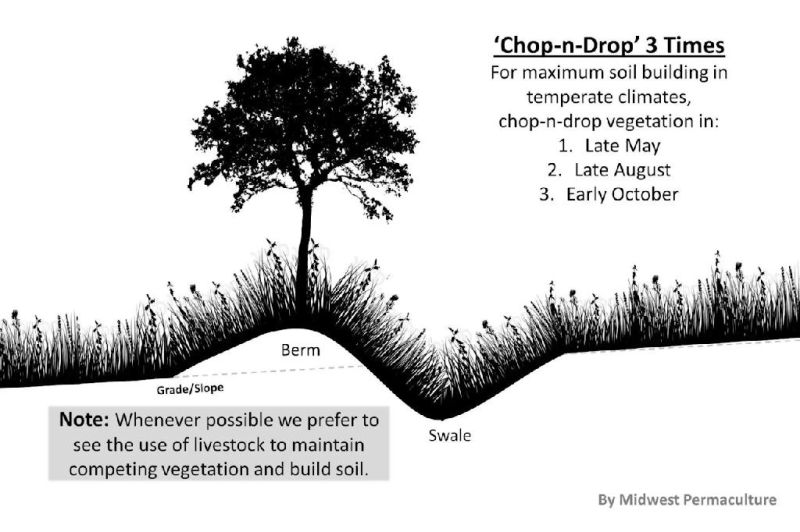
Swales and berms are ridges and ditches that follow contours and are used in flood prevention and management.
Surface Water Management: Swales and berms help manage surface water runoff by diverting and slowing down the flow of water, allowing it to infiltrate into the ground rather than causing flooding.
Flood Control: By redirecting and retaining excess water, swales and berms help prevent the overflow of water in low-lying areas and reduce the risk of flooding during heavy rainfall events.
Erosion Control: Swales and berms act as natural erosion control mechanisms by capturing sediment and preventing it from washing away. This helps in maintaining the stability of the soil and preventing soil erosion.
Water Quality Improvement: As water flows through swales, the vegetation and soil filter out pollutants, excess fertiliser and sediments, improving the overall quality of the water. This can have significant environmental benefits for downstream ecosystems.
Groundwater Recharge: Swales allow rainwater to infiltrate into the ground, replenishing groundwater resources. This helps maintain a healthy water table and can be particularly beneficial in areas where groundwater is a vital source of drinking water.
Drought Mitigation: By promoting infiltration, swales and berms help store water in the ground, creating reservoirs that can be tapped into during periods of drought. This helps mitigate the impacts of water scarcity and supports sustained vegetation growth.
Habitat Creation: Swales and berms, when properly designed and landscaped, can create diverse habitats for various plant and animal species. These habitats contribute to biodiversity, providing refuge and food sources for wildlife.
Aesthetics and Landscaping: Swales and berms can enhance the visual appeal of an area, particularly when combined with attractive vegetation and landscaping. They can be designed to blend seamlessly into the surrounding environment and contribute to the overall aesthetics of a space.
Cost-Effectiveness: Swales and berms are relatively low-cost flood prevention measures compared to traditional infrastructure projects like levees or channelization. They often require less maintenance and can be integrated into existing landscapes.
Community Engagement and Education: Implementing swales and berms in flood-prone areas provides an opportunity for community involvement and education. Local residents can participate in the planning and construction process, fostering a sense of ownership and understanding of flood management strategies.
Where can you see swales and berms near you?
How can you use swales and berms on your allotment?
What stops your local authorities from creating swales and berms?Activate to view larger image,